Tuesday, September 8, 2020

James G. Clark, The Benedictines in the Middle Ages

Five Surprising Rules for Medieval Monks 


Opus Dei

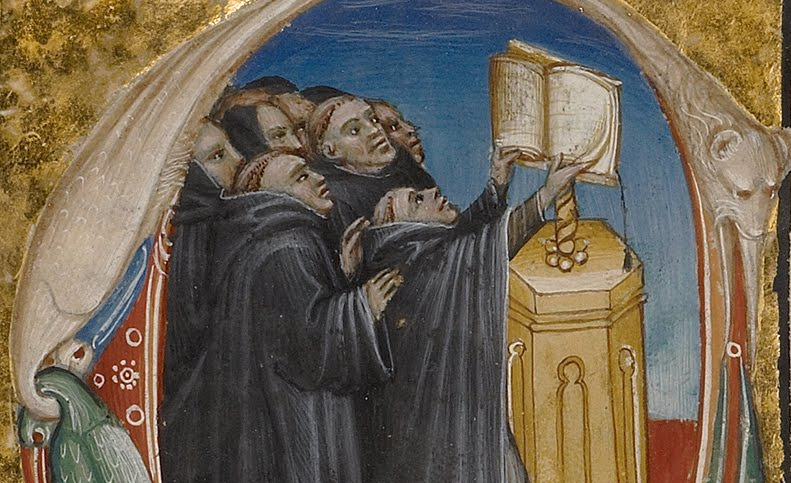
The opus Dei was the raison d'étre of the professed Benedictine. The physical and mental strictures of the RB, and the intellectual and spiritual training devised by its disciples, were conceived purely to support the sequence of offices, masses and other observances that punctuated the conventual day:  giving up their own will' to follow 'the master's command and the disciple's finished work' (RB, v). The sequence of day and night offices was not new to Benedict: it had been an evolving element of monastic practice since at least the second century and appeared in a form comparable to the RB in fourth-century monasteries witnessed by Cassian and in the pioneering colonies of southern France, such as those supervised by Caesarius of Arles. It is often claimed that Benedict's achievement was to codify diffuse forms of observance, but the foundation of a common horarium was already apparent at the beginning of the sixth century, and to his contemporaries the RB appeared to be only one of a number of regional and stylistic variants. Benedict's primary contribution was to synthesize the practice of the churches of Rome with emerging monastic custom. Over time his recension also proved to possess a clarity and simplicity — a certain sparseness of description — that rendered it more adaptable to different cultural, ecclesiastical and institutional circumstances.

The development of Benedictine life over the Middle Ages was driven in large measure by the demands of the opus Dei. The primary impulse in the first phases of reform in the ninth (Benedict of Aniane) and tenth (Berno of Cluny) centuries was for a return to ad literam observance of the Office. The pioneers at Cluny privileged the opus at the expense of other occupations: Anselm of Canterbury later confessed to a fear of their regime: 'If at Cluny all the time I have spent in study will be lost.’ Later codes, Æthelwold's Regularis Concordia and Lanfranc's Decreta, aimed to embellish the opus so as to enhance its spiritual power but not to alter its essential structure. In the Gregorian period, as the clerical orders multiplied, the opus Dei was upheld by the governors of the order, and by its secular observers, as the monks' distinctive contribution to Mother Church and their most valuable currency in the material world. After 1215 papal reformers sought to stem what they saw to be an incipient decline. Yet the chapters of the Benedictines were concerned to lighten the liturgical burden, not only the supernumerary commemorations required by benefactors, but also the incremental elaboration of the Office itself. The 1277 canons of the English chapters trimmed psalms and responses from the daytime offices and sought to standardize and simplify the seasonal variations; further revisions were promulgated in 1343 and again in 1444. 19 The pressure for pure observance of the Benedictine Office remained constant at least in England, where the intervention of the Lancastrian regime — at the Council of Westminster in 1421 — added weight to the views of episcopal visitors. These tensions should not be interpreted as a sign of the terminal decline of the opus Dei or the abandonment of the Office. The capitular canons had removed accretions and anomalous variations, but the rhythm of the liturgical round remained intact. There were perhaps greater interruptions to traditional observance in the reformed congregations of Bursfeld, Melk and Padua, where the observant hours were eclipsed by a program of claustral lectures. Certainly, in England the patterns of liturgy familiar to Black Monks of the early and high Middle Ages were still performed on the eve of the Dissolution. At Evesham Abbey the completion of the office was the final act of the brethren before passing out of the precinct forever.

Monday, September 7, 2020

Guigo II the Carthusian: The Ladder of Monks


 The Ladder of Divine Ascent - Wikipedia

Guigo II the Carthusian: The Ladder of Monks


The indescribable sweetness of the blessed life, is sought through reading, found in meditation, asked for in prayer and savored in contemplation. This is precisely what the Lord says: Search, and you will find; knock, and the door will be opened for you" (Mt 7:7). Seek by reading, and you will find by meditating. Knock by praying, and you will enter by contemplating. I would like to say that reading brings the substantial food to the mouth; meditation grinds and chews it; prayer tastes it, and contemplation is the sweetness itself that delights and restores. Reading keeps to the rind, meditation enters into the marrow, prayer expresses the desire, but contemplation takes pleasure in savoring the sweetness obtained. 

Festivitas vel Solemnitas


Fámulis tuis, quǽsumus, Dómine, cæléstis grátiæ munus impertíre, ut, quibus Beátæ Vírginis partus éxstitit salútis exórdium, Nativitátis eius festívitas pacis tríbuat increméntum.

Impart to your servants, we pray, O Lord, the gift of heavenly grace, that the feast of the Nativity of the Blessed Virgin may bring deeper peace to those for whom the birth of her Son was the dawning of salvation.

FÁMULIS TUIS, quǽsumus, Dómine, cœléstis grátiæ munus impertíre: ut, quibus beátæ Vírginis partus éxstitit salútis exórdium; Nativitátis ejus votíva solémnitas, pacis tríbuat increméntum.

BESTOW upon Thy servants, we beseech Thee, O Lord, the gift of Thy heavenly grace: that as the childbearing of the Blessed Virgin was the beginning of our salvation, so the solemn feast of her Nativity may bring us an increase of peace. 

Sunday, September 6, 2020

Sermon of St. Bernard, Abbot: De laudibus Virginis Matris, Hom. 2, n. 17


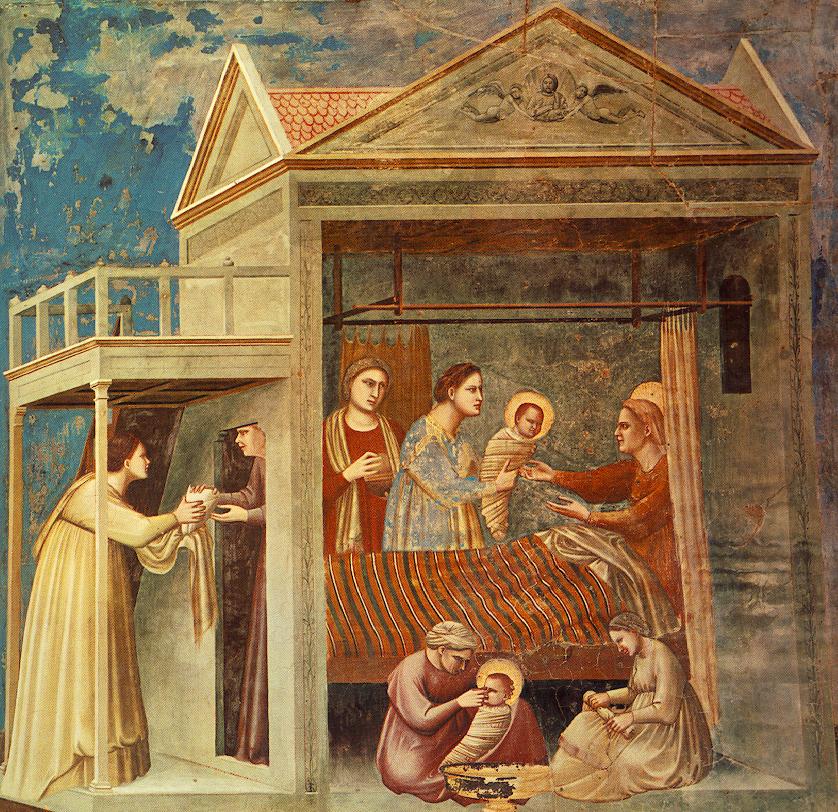
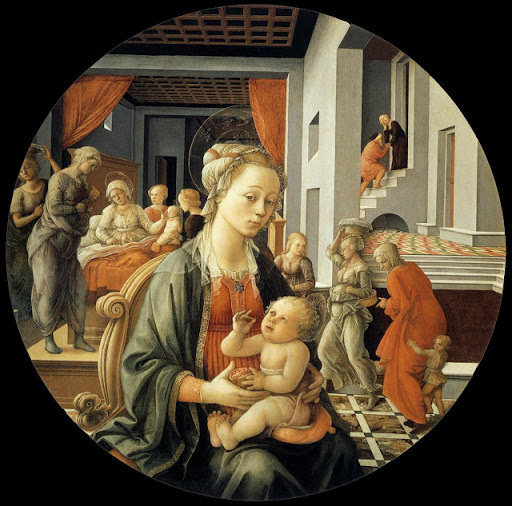
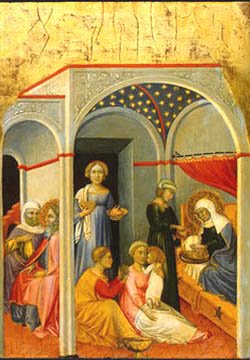
Nativity of Mary - Wikipedia


'And the Virgin's name was Mary.'  Let us now say a few words about this name, which means 'star of the sea' and is so becoming to the Virgin Mother. Surely, she is very fittingly likened to a star. The star sends forth its ray without harm to itself. In the same way the Virgin brought forth her son with no injury to herself. The ray no more diminishes the star's brightness than does the Son his mother's integrity. She is indeed that noble star risen out of Jacob whose beam enlightens this earthly globe.

She it is whose brightness both twinkles in the highest heaven and pierces the pit of hell, and is shed upon earth, warming our hearts far more than our bodies, fostering virtue and cauterizing vice. She, I tell you, is that splendid and wondrous star suspended as by necessity over this great wide sea, radiant with merit and brilliant in example. O you, whoever you are, who feel that in the tidal wave of this world you are nearer to being tossed about among the squalls and gales than treading on dry land, if you do not want to founder in the tempest, do not avert your eyes from the brightness of this star. When the wind of temptation blows up within you, when you strike upon the rock of tribulation, gaze up at this star, call out to Mary. Whether you are being tossed about by the waves of pride or ambition or slander or jealousy, gaze up at this star, call out to Mary. When rage or greed or fleshly desires are battering the skiff of your soul, gaze up at Mary. When the immensity of your sins weighs you down and you are bewildered by the loathsomeness of your conscience, when the terrifying thought of judgement appalls you and you begin to founder in the gulf of sadness and despair, think of Mary. In dangers, in hardships, in every doubt, think of Mary, call out to Mary. Keep her in your mouth, keep her in your heart. Follow the example of her life and you will obtain the favor of her prayer. Following her, you will never go astray. Asking her help, you will never despair. Keeping her in your thoughts, you will never wander away. With your hand in hers, you will never stumble. With her protecting you, you will not be afraid. With her leading you, you will never tire. Her kindness will see you through to the end. Then you will know by your own experience how true it is that 'the Virgin's name was Mary'.

IN NATIVITATE BEATÆ MARIÆ VIRGINIS: Peter Damian


 Catholic News World : Official Novena for the Birth of Mary, Blessed Virgin  with Plenary Indulgence - Powerful Prayers to Share!


IN NATIVITATE BEATÆ MARIÆ VIRGINIS: Peter Damian

Ad Officium lectionis & ad vesperas


Beáta Dei génetrix,

nitor humáni géneris,

per quam de servis líberi

lucísque sumus fílii;


María, virgo régia,

David stirpe progénita,

non tam patérna nóbilis

quam dignitáte súbolis,


Tu nos, avúlso véteri,

complánta novo gérmini;

per te sit genus hóminum

regále sacerdótium.


Tu nos culpárum néxibus

sacris absólve précibus;

tua proméntes mérita

ad cæli transfer præmia.


Sit Trinitáti glória,

o Virgo nobilíssima,

quæ te suórum múnerum

thesáurum dat magníficum. Amen.


O blessed Mother of God, splendor of the human race, through whom we are freed from slavery and made sons of light.  O Mary, O royal Virgin, born from the branch of David, noble not so much from your forefather as from the dignity of your offspring.  Take away from us what is old, plant in us a new seed; through you the race of men becomes a royal priesthood. By your holy prayers untie the bounds of our sins; by your merits making us worthy lead us to heavenly rewards. To the Trinity be glory, O most noble Virgin, who gave you such a magnificent treasury of their gifts. Amen.


Ad Laudes matutinas: saec. X


O sancta mundi dómina,

regína cæli ínclita,

o stella maris fúlgida,

virgo mater mirífica,


Appáre, dulcis fília,

nitésce iam, virgúncula,

florem latúra nóbilem,

Christum Deum et hóminem.


Natális tui ánnua

en cólimus sollémnia,

quo stirpe delectíssima

mundo fulsísti génita.


Per te sumus, terrígenæ

simúlque iam cælígenæ,

pacáti pace nóbili,

more non æstimábili.


Sit Trinitáti glória

per sæculórum sæcula,

cuius vocáris múnere

mater beáta Ecclésiæ. Amen.


O holy Mistress of the world, illustrious Queen of heaven, O brilliant star of the sea, Virgin Mother wondrous. Reveal yourself, O sweet daughter, Shine forth how, O little girl, bearing a noble flower, Christ, God and man.  We celebrate the annual solemnity of your birth, born from a most beloved line, You shine forth upon the world. Through you, we are at once earthly and heavenly, by a noble blessing we are at rest in a way beyond measure. Glory be to the Trinity through ages of ages, whose gift it is that you be called blessed Mother of the Church.


Friday, September 4, 2020

Sermon of St. Laurence of Brindisi: Sermon V, Concept. Immac. We can judge the conception of Mary from that of her Son


MARY, OUR MOTHER: A Short Reflection on the Nativity of the Blessed Virgin  Mary

The evangelists were guided by no merely human motive when they recorded the sacred events of the gospel for all succeeding ages: they were inspired by the Holy Spirit. Now the Holy Spirit would not have them say anything about the Virgin Mary's conception; his will was that they should honor it with respectful silence, as they had honored the creation of heaven and the angels; and he wanted us to gain an understanding of the blessed Virgin's holy birth and immaculate conception from the conception and birth of Christ. The creation of the earth was very like the creation of the heavens, the moon was created in much the same way as the sun, and woman's making was very similar to man's; even though the heavens have more nobility than the earth, the sun more light than the moon, and man a higher rank than woman. In the same way, although Christ's conception is a much nobler thing than the blessed Virgin's and belongs to a much higher category, there is still a very close resemblance between her conception and his, just as there was between Adam's making and Eve's, if we may judge by the text, Let us make him a help like unto himself. Eve was fashioned from Adam's side and was made like him, though less than he; and so it was with Mary, who was fashioned from the side Of Christ. But whereas it was Eve's natural gifts that came from Adam, what Mary derived from Christ was grace.

Mary is like Christ in every respect: in nature, in grace and in glory. She is like him in nature: she has the same nature as he has. She is like him in grace because she too is holy, being full of grace, full of the Holy Spirit. She is like him in glory, as the moon is like the sun or as a queen is like her king (At thy right hand stands the queen). And Christ and Mary were alike in their predestination and birth, their life, death and resurrection, their assumption and glorification. They were alike in their predestination because Christ was predestined not as God but as man, as Mary's Son: so that her predestination was bound up with his. Her birth was like his because she was born holy, as he was. Her death was like his because she died through no fault Of her own. Her rising was like his, because she rose in glory and went up to heaven, where she sits at his right hand, supremely honored, above all the choirs of angels. And so, we must assume that her conception too was like his and suppose that like him she was conceived without sin, holy and full of grace; just as the sun and moon and stars—all analogues of her—were created full of light. If the Church has chosen for the feasts of the Conception and Nativity of the blessed Virgin the gospels of Christ's conception and nativity, it is precisely because of the great similarity between the two. And in any case, if Christ really is Mary's Son, Christ's ancestors are Mary's ancestors. 

Thursday, September 3, 2020

St. Gertrude: Chapter 46. The Seven Hours of the Blessed Virgin


for November | Catholic saints, Gertrudes, Santa gertrudes 

Keeping vigil one night, exerting herself to think with love about the Lord's passion, she became very tired, and although she had not yet said Matins, she felt all her strength failing. She said to the Lord: "Ah, my Lord, as you know that, through my human frailty, I cannot do without a little rest, show me what I can do to honor and serve your most blessed Mother, since I am not able to recite her Hours as I ought. "

The Lord said to her: "Praise me by the sweet-sounding harmony' of my heart, in the innocent integrity of her virginity in which she, a virgin, conceived me, bore me, and after my birth remained a virgin inviolate.  She imitated the innocence which led me to permit myself, at the hour of Matins, for the redemption of the human race, to be taken captive, bound, struck, and given blows, and to be mercilessly subjected to all kinds of misery and outrage." While she was doing this, she saw the Lord offering his divine heart to his virgin Mother, in the likeness of a golden cup, whence she might drink. And when she had drunk of the honey sweetness of this draught, she seemed sweetly and abundantly satisfied—inebriated, rather—and, penetrated to the marrow, she was seen to rejoice with exceeding gladness.

Then she praised the blessed Virgin, saying: "I praise and salute you, Mother of all blessedness, most worthy tabernacle of the Holy Spirit, through the sweetest heart of Jesus, God the Father's most loving Son and yours, praying that you may help us in all our necessities and at the hour of death. Amen. " And she understood that if anyone praises the Lord as has just been described, and at the same time praises the blessed Virgin by adding the verse "I praise and salute you, Mother. . . as above, each time, they would, so to speak, offer to the virgin Mother a drink from the sweetest heart of Jesus Christ, her most loving Son. 82 The royal Virgin will gladly accept this offering and will kindly deign to reward it with the liberality of her maternal affection.

Then the Lord continued: "Praise me for Prime with the sweetly sounding harmony of my heart, for the serene humility with which the immaculate Virgin was ever more ready to receive me. She imitated the humility which led me, the judge of the living and the dead, to stand, at the hour of Prime, before a man like a Saracen83 to be judged, for the redemption of the human race.

At Terce, praise me for the fervent desire which drew me, the Son of God, from the bosom of the Father into her virginal womb. She imitated me in that fervent desire with which I desired the salvation of man as I was being struck with hard scourges, crowned with thorns, and, at the hour of Terce, deigned to bear upon my tired and bleeding shoulders with such meekness and patience a most infamous cross.

At Sext, praise me for that firm and most secure hope with which the heavenly Virgin always aspired with good will and holy intentions to seek my glory. She imitated me when, hanging on the tree of the cross on high, in the harshness of a most bitter death, I longed with all my strength for the redemption of the human race, so that I cried: "I thirst" (Jn. 19:28). I thirsted so much for the salvation of human souls that, had it been necessary, I would have borne harder and more bitter torments; I was ready to offer myself freely and entirely for the redemption of man.

At None, praise me for that most ardent mutual love of the divine heart and the immaculate Virgin, which joined and inseparably united the most excellent divinity with tender humanity in the Virgin's womb. She imitated me, the life of the living, as I died of the immensity of my love on the cross at the hour of None, succumbing to a most bitter death for man's redemption.

At Vespers, praise me for that most constant faith in which the blessed Virgin alone, at the time of my death, when the apostles had fled and everyone despaired, remained unshaken in true faith. She imitated me in the fidelity with which I, now dead, taken down from the cross, followed man down even to the confines of hell, to limbo, snatching him thence in my mercy with my all-powerful hand and transferring him to the joys of paradise.

At Compline, praise me for that most laudable perseverance with which my sweetest Mother persevered to the end (cf. Matt. 10:22) in goodness and virtue. She imitated me in performing so lovingly the work of human redemption that, after obtaining man's true liberation from the bonds of sin by the most bitter death, I even wanted my incorruptible body to be buried according to human custom, in order to show that there was no indignity I would refuse to undergo for the sake of man's salvation.