Tuesday, November 14, 2023

14th November, All Souls of the Benedictine Order


FRIDAY, 14 NOVEMBER 2014

14th November, All Souls of the Benedictine Order

All Souls of the Benedictine Order


Yesterday the Benedictine Order celebrated its saints - those who are now part of the Church Triumphant in heaven. Today it remembers its members who are part of the Church suffering, completing their purification in purgatory.


Requiem aeternam dona eis, Domine: et lux perpetua luceat eis. * Te decet hymnus Deus, in Sion, et tibi reddetur votum in Jerusalem: exaudi orationem meam, ad te omnis caro veniet.

Eternal rest give to them, O Lord; and let perpetual light shine upon them. * A hymn, O God, becometh Thee in Sion; and a vow shall be paid to Thee in Jerusalem: hear my prayer; all flesh shall come to Thee.
(Psalm 64. 2-3, from the Introit of Mass)


O God, Who grantest forgiveness and desirest the salvation of mankind, we beseech Thee in Thy mercy to grant that the brethren of our congregation, who have passed out of this life, may partake of everlasting bliss by the intercession of Blessed Mary ever Virgin and of all Thy saints.

Monday, November 13, 2023

From the treatise On the Nature of God by Saint Albert the Great.


From the treatise On the Nature of God by Saint Albert the Great.


The Word of the Father increased, not diminished, the virginity of his mother.


The Blessed Virgin is called the morning star because the morning of   grace has dawned in her, and she is among the clouds which usually rise in the morning. The cloud that the Blessed Virgin scatters is threefold namely, the cloud of sin, the cloud of sorrow, and the cloud of error. First, she scatters by interceding for sinners, the second by pouring consolation on those who suffer, and the third by revealing the truth. She shines like the full moon, whose light is not diminished but increases and

remains continuously diffusing the light of grace to all who are in darkness and in the shadow of death. And like the shining sun she both sheds the warmth of piety and in her goodness melts all rational creatures in order to mold them anew. But this is not sufficient for her praise. Indeed, she is more beautiful than the sun and excels every constellation of the stars.  Compared with the light she is found to be superior, for it is succeeded by the night, but against Mary, the star of the sea, evil does not prevail.

This star of light alone so guides us even in darkness that a little old woman may sometimes contemplate what the learned do not grasp, because the learned scorn to make their intellects captive and bring their minds submission to God. And this is symbolized, when the ass reproves the prophet, for the ass and not the prophet recognized the angel of God and the will of God. Thus. according to the Sentences of Peter Lombard, through a mute beast of burden God rebuked the foolishness of the prophet. This still happens when an unlearned person serves under the yoke of Christ, mute as to the rhetorical and polished language that comes from a knowledge of the arts, and rebukes by word and example the doctors who from the summit of their science know how to examine the heights of heaven as well as the depths of the abyss.

She is a star because "like a ray from a heavenly body the Virgin brought forth her Son in a similar way. For a star does not lose its integrity from its ray, nor did the mother from her Son." So great is the difference between the birth of heavenly bodies and earthly bodies that the terrestrial in giving birth lose their integrity, the heavenly do not. For no matter how rays of light a star puts forth, the star is not marred nor is its light teen to diminish. Thus, the Word of the Father, the ray of eternal light, a brilliant and spotless mirror of the clarity of the Father, brought fecundity to the mother, but did not take away her virginity. The light of her virginity increased, it did not diminish. Without a doubt nothing will be impossible with God. For he who walked on the waves of the sea without immersing his body, who came forth from the tomb without breaking the seal on the done which we read was rolled back by an angel not by the Lord, and who entered the room with the disciples while the doors were locked, was also Able to be born of a virgin mother without breaking the cloister of her virginal chastity. Thus, the aforesaid star, the Blessed Virgin, has risen out of Jacob, because like a rose springing from a root and branch of thorns, thus she herself from the thorny people of the synagogue consented to the lord's birth.

Or we may say that we are that thorny people who have been bloodied by the thorn of sin, or by our very ignorance of the thorn; but as the thorn brings forth a rose so we from our nature brought forth Mary. Therefore, it said: As a lily among thorns so is my beloved among the maidens. She is called a lily, not that she is not a rose, but that the totality of her virtue may be understood. For she is the rose of patience amidst the pricking of thorns Ind the lily of chastity blooming in the field of our nature, which field is accustomed to bringing forth the poisons and nettles of an alluring concupiscence. But through this star a shoot arose from Israel, that is, the power and the rule of Christ: A shoot shall spring from the stump of Jesse, und a branch will sprout from his roots. From Jesse the Lord has sprung In the flesh, but not by the power of human generation, no matter how powerful the fire of the human spirit. For he was born by the power of the Holy Spirit, not from Jesse' s substance, for the name Jesse is interpreted as "fire. "

Sunday, November 12, 2023

All Saints of the Benedictine and Cistercian Orders


All Saints of the Benedictine and Cistercian Orders

Those interested in the Benedictine family may be interested to know that today, within the Benedictine liturgical tradition, is traditionally celebrated the feast of All Saints of the Benedictine Order - In Festo Omnium Sanctorum Ordinis S.P.N. Benedicti. The Cistercians -- who also follow the Rule of St. Benedict -- likewise observe this day for All Saints of their Order. (On a related note, the Benedictines also traditionally observe November 14th as All Souls of their Order. So far as I can tell, the Cistercians did not.)

This is perhaps a pertinent time to recollect the importance of the sons and daughters of St. Benedict -- and monasticism generally -- within the history of Christendom, and to again reflect on the pertinence of the monastic vocation not only in the past but also for the present. Let us support our monasteries, and if you believe you have a calling to priestly or religious life, may I simply encourage you to not neglect the consideration of the monastic vocation in your discernment of God's will for you.

Br. Stephen, O.Cist, has a post on this today and mentions the following hymn found today in the Cistercian breviary, the Breviarium Cisterciense; it was also found on this day in the earlier versions of the Breviarium Monasticum, the breviary of the Benedictines, though it seems that it has been removed by the time of the 1963 edition.

Avete Solitudinis Claustrique Mites


Hail dwellers in the solitude
And in the lowly cloister cell,
Who steadfast and unshaken stood
Against the raging hordes of hell.

All wealth of gold and precious stone
And glories all of rank and birth
You cast away and trampled on,
With all low pleasures of this earth.

The green fields and the orchards grew
The simple fare whereon ye fed.
The brook was drink enough for you,
And on the hard ground was your bed.

Around you dwelt the venomed snakes,
And fiercest monsters harboured near.
All foul forms that the demon takes
You saw, but would not yield to fear.

Far, far beyond all earthly things
Your burning thoughts would wing their flight,
And hear the holy whisperings
Of angels in the heavenly height.

Thou Father of the heavenly host,
Thou glorious Son of Mary maid,
Thou Paraclete, the Holy Ghost,
To Thee be praise and glory paid.

Thursday, November 9, 2023

St. Andrew Avellino: Commemoration of St. Theodore, Martyr


St. Andrew Avellino: Commemoration of St. Theodore, Martyr


Andrew Avellino, previously called Lancelot, was born at Castro Nuovo, a village in Lucania. He learned jurisprudence at Naples, was ordained priest, and began to practice law, though only in ecclesiastical courts. But once, when he was presenting a case, he let slip a small lie, and then happened upon the words of Scripture: "A lying mouth slays the soul". He was seized with remorse and sorrow, abandoned the practice of law, and begged to be admitted among the Clerks Regular. Successful in this petition, he also obtained by prayer, on account of the great love of Cross, with which he burned, the favor of being given the name Andrew. He was outstanding for his abstinence, patience, humility and contempt of self. He caused the Order of Clerks to spread in wonderful way. He honored the Virgin Mother of God, with a singular love and reverence. After giving heroic examples of virtue, worn with old age and broken by his labors, as he was beginning the celebration of Mass, after the third repetition of the words, "I will go into the altar of God", he suffered a stroke and apoplexy and died peacefully soon afterwards fortified by the sacraments.


Deus, qui in corde beáti Andréæ Confessóris tui, per árduum cotídie in virtútibus proficiéndi votum, admirábiles ad te ascensiónes disposuísti: concéde nobis, ipsíus méritis et intercessióne, ita eiúsdem grátiæ partícipes fíeri; ut, perfectióra semper exsequéntes, ad glóriæ tuæ fastígium felíciter perducámur.
Per Dóminum

Commemoratio Ss. Tryphonis et Sociorum Mártyrum
Ant. Vestri capílli cápitis omnes numeráti sunt: nolíte timére: multis passéribus melióres estis vos.

V. Exsultábunt Sancti in glória.
R. Lætabúntur in cubílibus suis.

Orémus.
Fac nos, quǽsumus, Dómine, sanctórum Mártyrum tuórum Tryphónis, Respícii et Nymphæ semper festa sectári: quorum suffrágiis, protectiónis tuæ dona sentiámus.
Per Dóminum

O God, who dost every year bring round unto us again the day whereon this thine holy temple was hallowed, and bringest us again in soundness of body and mind to be present at thine holy worship, graciously hear the supplications of thy people, and grant that whosoever shall come into this thine house to ask good at thine hand, may be rejoiced in the obtaining of all his request.
Through our Lord Jesus Christ.

Commemoration of St. Theodore, Martyr
Ant. He that hateth his life in this world, shall keep it unto life eternal.

V. The righteous shall flourish like the palm-tree.
R. He shall grow like a cedar in Lebanon.

Let us pray.
O God, who surround and protect us with the glorious profession of blessed Theodore, Your Martyr, grant us to profit by imitating him and to rejoice in his intercession.
Through our Lord Jesus Christ.

Tuesday, November 7, 2023

8th November, The Holy Four Crowned Martyrs


8th November, The Holy Four Crowned Martyrs

The Holy Four Crowned Martyrs


These saints were four brothers whose names remained long unknown. They were called "the four crowned" (quattuor coronati) because they received the palm of martyrdom under Diocletian in 304 and were crowned in heaven.


Intret in conspectu tuo, Domine, gemitus compeditorum: redde vicinis nostris septuplum in sinu eorum: vindica sanguinem sanctorum tuorum, qui effusus est. * Deus, venerunt gentes in haereditatem tuam: polluerunt templum sanctum tuum: posuerunt Jerusalem in pomorum custodiam.

Let the sighing of the prisoners come in before Thee, O Lord; render to our neighbors sevenfold in their bosom; revenge the blood of Thy saints, which hath been shed. * O God, the heathens are come into Thy inheritance: they have defiled Thy holy temple: they have made Jerusalem as a place to keep fruit.
(Psalm 78:11-12,1 from the Introit of Mass)


Praesta, quaesumus, omnípotens Deus: ut, qui gloriósos Mártyres fortes in sua confessióne cognóvimus, pios apud te in nostra intercessióne sentiámus.

Grant, we beseech Thee, O almighty God, that we who acknowledge the steadfastness of Thy glorious Martyrs in their confession, may enjoy their loving intercession with Thee.
(Collect)

9th November Feast of the Dedication of the Lateran Basilica


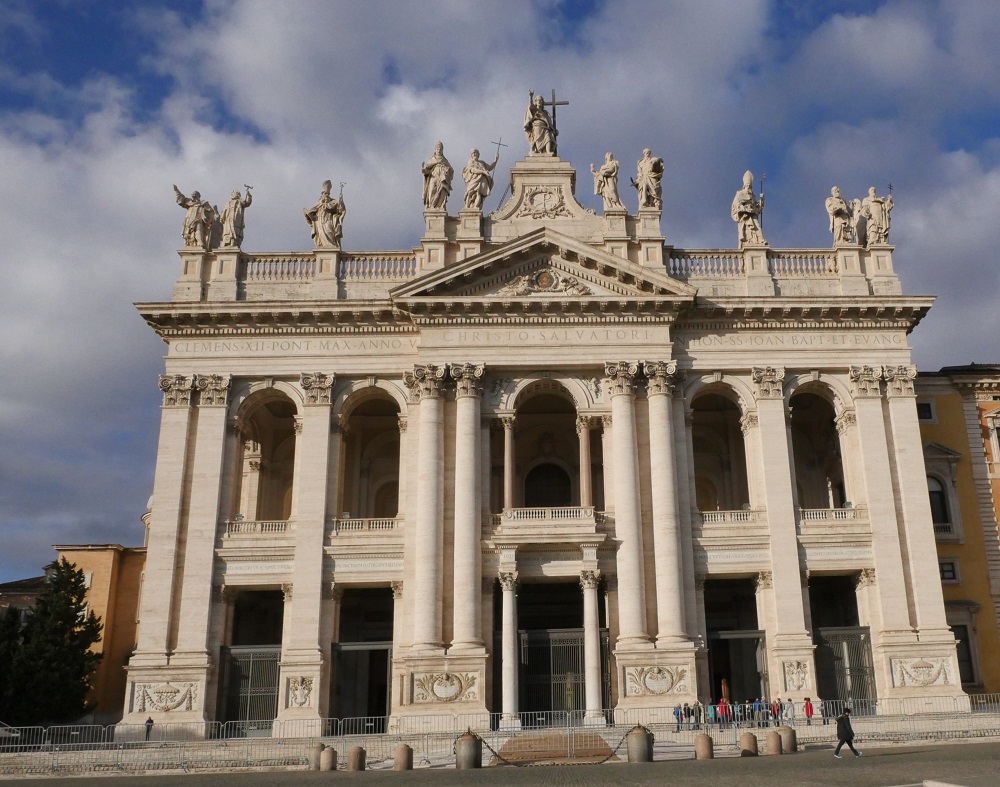
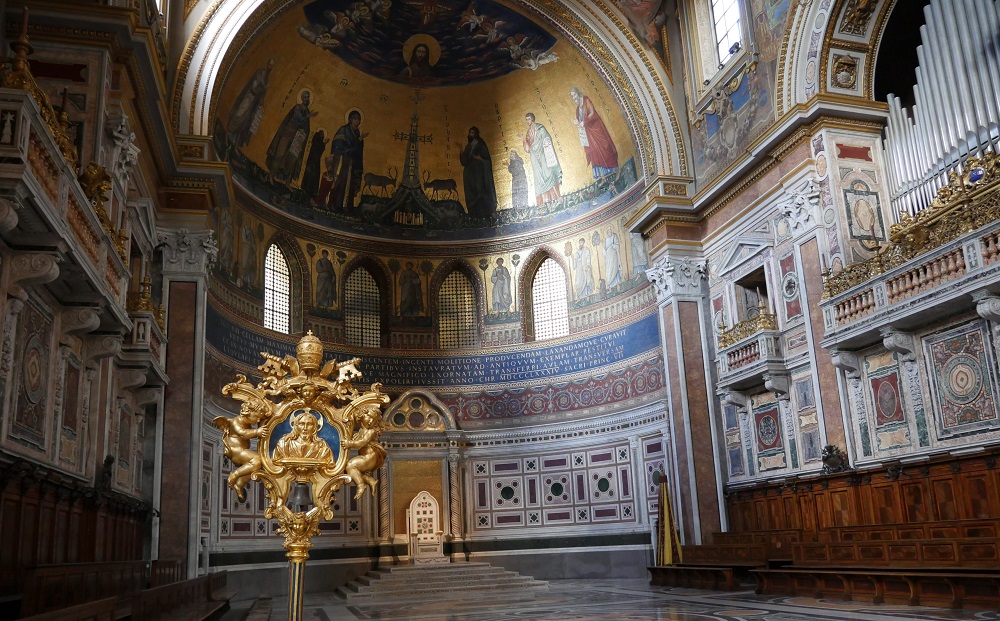
9th November Feast of the Dedication of the Lateran Basilica Rome: “Mater et Caput”

St John Lateran’s Basilica, Rome.

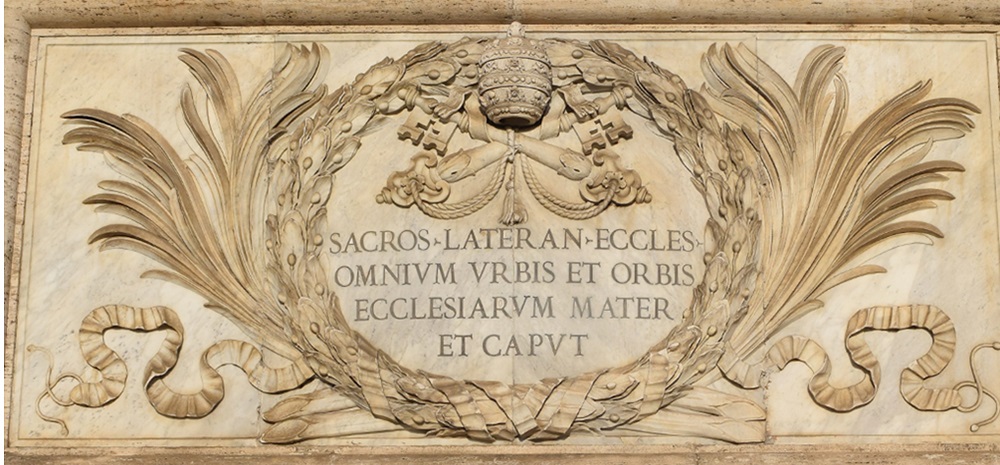
St John Lateran’s Basilica in Rome is the “Mater et Caput”, ‘Mother and head’, of all churches in Rome and the world. This fact is celebrated by the relief that adorns the entrance to the Basilica.

Most Holy Lateran Church, Mother and Head of all churches in this city and the world.

The name “Lateran” is derived from the fact that this Basilica was constructed on the territory that belonged to the Lateran family before it was bequest as an inheritance to Fausta, the wife of the Emperor Constantine. The Basilica was consecrated by Pope Sylvester I on the 9th November 324 and the liturgical feast of the Basilica, which is celebrated on the same day, commemorates this event. This feast has a special importance because the Lateran Basilica was the first church dedicated to the Most Holy Saviour under the express wishes of the Emperor Constantine. The entire Church celebrates this feast as an affirmation of unity with the Pope who is the Bishop of Rome and Head of the Universal Church.

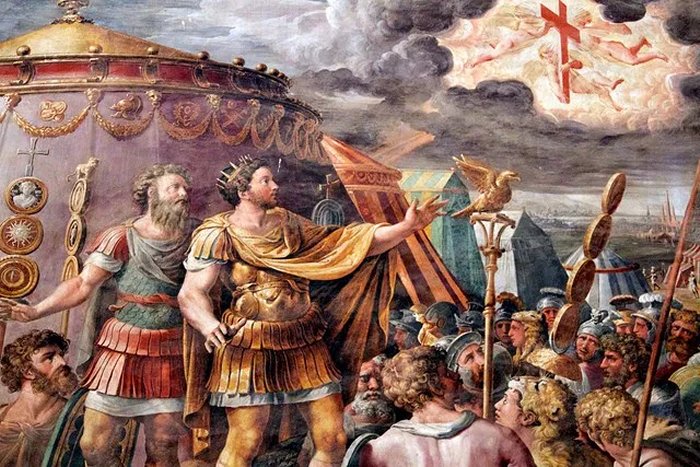
The existence of the Basilica testifies to Constantine’s vision of the cross in the sky which turned out to be a prodigious event that profoundly changed the practice of Christianity during the first centuries.

Raphael, Vision of the Cross, Raphael Rooms, Vatican Museums.

Bishop Eusebius of Caesarea, a friend and confident of Constantine, recounts that the night preceding the battle for domination of the Roman Empire against Maxentius, the Emperor considered which god to appeal to for help and protection in the battle. Like his father before him, Constantine had decided to adopt the sun god and he prayed that this god would reveal himself to him. Suddenly, a vision of an illuminous cross appeared in the sky which was visible to the whole army. Beneath the vision were the words, “In hoc signo vinces” which means ‘with this sign you will be victorious’. The following morning the army went into battle bearing the sign of the cross.

The battle took place on the 28th October 312 at Saxa Ruba in Rome and concluded with the Battle of the Milvian Bridge. Maxentius stumbled with his horse and fell into the River Tiber leaving Constantine free to enter Rome victorious.

Thanks to this victory, the Emperor brought an end to three centuries of Christian persecution during which many Christians were martyred. Constantine publicly authorised Christian worship with the proclamation of the celebrated Edict of Milan in 312.

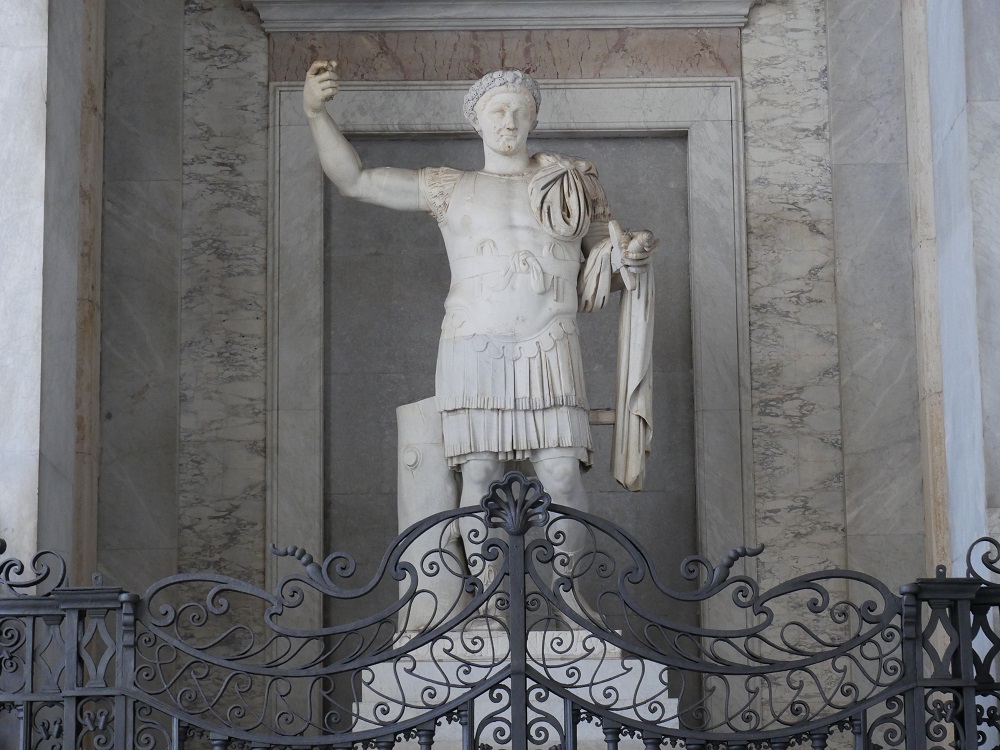
Statue of the Emperor Constantine, Portico of the Lateran Basilica.

The Emperor himself initially dedicated the Basilica to the Most Holy Saviour in gratitude for the victory. Only later, when the Basilica was also dedicated to Saints John the Baptist and the Evangelist, did it become known by its most popular name as St John Lateran.

The Chair of the Lateran Basilica which represents the teaching seat of the Holy Father.

The importance of the feast of the ‘dedication of the Lateran Basilica’ celebrates the fact that Christians could freely come together in union with their Bishop to celebrate the liturgy of the Church and receive the teaching of the doctrine of the faith. From antiquity, the Basilica became the Cathedral of Rome and the world. The Pope has his Cathedra or Chair here as a sign of his teaching, his magisterium and his precedence. Therefore, the Petrine ministry is only initiated when the elected Pope has taken possession of the Chair of St John Lateran.

This beautiful edifice represents the Church – the assembly formed of the ‘living stones’ of Christians who today, as in centuries past, continue to testify their faith in Jesus Christ, the Most Holy Saviour.

Saturday, November 4, 2023

Homily by St. Jerome, Priest at Bethlehem. Bk. I Comment. on Matth. IX


Homily by St. Jerome, Priest at Bethlehem.

Bk. I Comment. on Matth. IX


St Jerome’s Homily on Matthew 9:18-26 for the Twenty-Third Sunday After Pentecost


I. This is the eighth miracle wrought by Jesus, when a certain ruler, desiring not to be kept out of the true circumcision, besought Him to recall his daughter to life. The ceremony of circumcision, which usually took place on the eighth day after the birth, seems to be indicated by this miracle. Jairus, the ruler of the synagogue, certainly deserved the preference; but a woman, diseased with an issue of blood, thrust herself in, and her own cure occupies the eighth place, so that the resurrection of the ruler’s daughter is postponed, and made the ninth in the enumeration. Indeed, it seems that by this case our Saviour wished to call our attention to the vocation of the Gentiles; for we read in the Psalms: Ambassadors shall come out of Egypt; Ethiopia shall soon stretch out her hands to God (Ps 68:32). A great mystery, spoken of by the Apostle, saying: Blindness in part has happened to Israel, until the fulness of the Gentiles should come in. And so all Israel should be saved, as it is written: There shall come out of Sion He that shall deliver, and shall turn away ungodliness from Jacob (Rom 11:25-26).

II. And behold a woman who was troubled with an issue of blood twelve years, came behind Him, and touched the hem of His garment. Now, compare these two miracles in this Gospel: the first, a woman troubled with her disease for twelve years; the second, the resurrection of the daughter of Jairus who, according to St. Luke (Lk 8:42), was twelve years old; and you will come to the conclusion that the woman, a type of the Gentiles, had been diseased for the same time that the Jewish nation, typified by the ruler’s daughter, had been living in faith. It is only by comparing good with evil that is, idolatry that we see the hideousness of the latter. Note also that this woman with the issue of blood came to our Lord, not in a house nor in a city, for such as she were by the law banished out of cities (Lev 15:25), but in the way, as He walked. Thus our Lord healed one even whilst He was on the road to heal another. Whence the Apostles said: To you it behooved us first to speak the word of God; but because you reject it, and judge yourselves unworthy of eternal life, behold we turn to the Gentiles. For so the Lord has commanded us: I have set thee to be the light of the Gentiles, that thou mayest be for salvation unto the utmost parts of the earth (Acts 13:46-47).

III. According to the Law, whosoever touched a woman with an issue of blood was declared unclean. Here, how ever, we see a woman touch Jesus to be cured of that issue by which she seemed to be unclean. Be of good heart, daughter, said Jesus; thy faith hath made thee whole. Our Saviour calls her daughter, and justly, on account of her faith, by which she was cured. Note, again, our Lord did not say to the woman that her faith would make her whole that is, clean but thy faith hath made thee whole. It was to give her to understand that, as soon as she believed, she was cured. And when Jesus was come into the house of the ruler, and saw the minstrels and the multitude making a rout, He said. The deceased daughter of Jairus was the type of the Jewish nation, even now, after so many years, in a state of death. The Rabbis, entrusted with the instruction of that nation, may be compared to the minstrels playing a mournful and useless tune. The Jewish leaders, as we know, were only a noisy society of infidels, not of believers; and when Jesus said, Give place, for the girl is not dead, but sleepeth, He wished to teach us that every being, under the dominion of the living God, is alive. And when the multitude was put forth, He went in. Indeed, these people, laughing to scorn the One Who had power to give life, were not worthy to assist at the miraculous resurrection of this maiden.

IV. Finally, consider the last point of likeness between the Jewish nation and the ruler’s daughter who, being dead, received life. He took her by the hand. And the maid arose. And the fame thereof went abroad into all the country. The unbelieving synagogue, typified by this daughter, is dead; for her sinful hands are covered with the prophet’s blood shed by them and their fathers (Matt 23:29-36). To rise from that death her stained hands must be washed in the same innocent Blood of Jesus Christ, the Author of all life.