Monday, July 18, 2022

SS. IOACHIM ET ANNÆ, PARENTUM BEATÆ MARIÆ VIRGINIS


Ad Officium lectionis & ad Vesperas: saec. XVII?


Dum tuas festo, pater o colénde,

cántico laudes habet hæc coróna,

vocis ac mentis, Ióachim, benígne

  áccipe munus.


Longa te regum séries avórum

Abrahæ prolem tulit atque David;

clárior mundi dómina corúscas

  prole María.


Sic tuum germen benedícta ab Anna

éditum, patrum repetíta vota

implet, et mæsto próperat reférre

  gáudia mundo.


Laus tibi, Prolis Pater increátæ;

laus tibi, summi Súboles Paréntis;

summa laus, compar, tibi sit per omne,

  Spíritus, ævum. Amen.


O venerable father, Joachim, as this crown offers you praise with a festal hymn, kindly receive the gift of voice and mind. The long succession of kings, your ancestors, made you offspring of Abraham and David; you shine brighter because of your child, Mary, Lady of the whole world. Thus, your offspring issuing forth from blessed Anne fulfills the endless prayers of your fathers and hastens to turn the sorrow of the world into gladness. Praise to you, O Father of the uncreated Son, praise to you, O Progeny of the highest Father, highest and equal praise, O Spirit, be to you through all ages. Amen.


Ad Laudes matutinas: saec. XV


Nocti succédit lúcifer,

quem mox auróra séquitur,

solis ortum prænúntians

mundum lustrántis lúmine.


Christus sol est iustítiæ,

auróra Mater grátiæ,

quam, Anna, præis rútilans

legis propéllens ténebras.


Anna, radix ubérrima,

arbor tu salutífera,

virgam prodúcens flóridam

quæ Christum nobis áttulit.


O matris Christi génetrix

tuque parens sanctíssime,

natæ favénte mérito,

nobis rogáte véniam.


The morning star succeeds to night, the dawn soon follows, announcing the rising of the sun, which illuminates the world with light. Christ is the Sun of justice, his Mother the dawn of grace, whom resplendent Anne precedes, driving away the darkness of the old law.  O Anne, the most fruitful root, you, the saving tree, producing that flowering branch, which Christ brings to us. O Mother of the Mother of Christ, and you, Joachim, her most holy parent, by the merits of your daughter, ask for us pardon.

S. IACOBI, APOSTOLI


 Ad Laudes matutinas: novus


Te nostra lætis láudibus,

Iacóbe, tollunt cántica,

quem Christus arte ex rétium

ad tanta vexit cúlmina.


Ipso vocánte, cóncitus

cum fratre linquis ómnia,

ipsíus et fis nóminis

verbíque præco férvidus.


Testis poténtis déxteræ

præclárus alta cónspicis,

in monte celsam glóriam,

tristes in horto angústias.


Qui promptus exstas, póscitur

cum passiónis póculum,

tu primus ex apóstolis

pro Christi amóre plécteris.


Iesu fidélis ássecla

satórque lucis cælicæ,

mentes fide claréscere,

da spe fovéri péctora.


Christi sequi da sédulos

præcépta nos in sæculo,

hymnos ut olim glóriæ

fundámus illi pérpetim. Amen.


Our hymns with joyful praises are raised up to you, O James, whom Christ carried away from the work of the nets up to such heights.  At his call you with your brother rose quickly forsaking everything that you might be a fervent preacher of his name and his word.  A glorious witness of his powerful right hand, you contemplated lofty matters: on the mountain his heavenly glory; in the garden his sad anguish.  You bravely stood ready to drink the cup of his passion; you are the first of the apostles to be punished for the love of Christ.  Faithful follower of Jesus and sower of heavenly light, grant that our souls may shine with faith, our hearts with burning hope.  Grant us diligently to follow the precepts of Christ in this world that we in heaven pour forth hymns of glory to him forever. Amen.


Sunday, July 17, 2022

Tuesday: Weeks II & IV


Lauds: 6th -7th Centuries

Ætérne lucis cónditor,
lux ipse totus et dies,
noctem nec ullam séntiens
natúra lucis pérpeti, (1)

Iam cedit pallens próximo
diéi nox advéntui,
obtúndens lumen síderum (2)
adest et clarus lúcifer.

Iam stratis læti súrgimus
grates canéntes et tuas,
quod cæcam noctem vícerit
revéctans rursus sol diem.

Te nunc, ne carnis gáudia
blandis subrépant ǽstibus, (3)
dolis ne cedat sǽculi
mens nostra, sancte, quǽsumus.

Ira ne rixas próvocet,
gulam ne venter íncitet,(4)
opum pervértat ne famis,(5)
turpis ne luxus óccupet, (6)

Sed firma mente sóbrii,
casto manéntes córpore
totum fidéli spíritu
Christo ducámus hunc diem. (7)

Sed firma mente sóbrii,
casto manéntes córpore
totum fidéli spíritu
Christo ducámus hunc diem. Amen. 

Eternal Creator of light, light itself and wholly day, you know nothing of night, by virtue of being perpetual light. Now colorless night surrenders to coming day, the bright morning star is here and shrouding the solid light of the stars. Now we rise joyfully from our beds and sing our thanks to you, for the sun returns again the day, which conquers blind night. Now we pray you, O holy Christ, that joys of the flesh not catch us unaware with worldly allurements  and our minds not fall to secular deceits. That anger not provoke strife, that the stomach not incite gluttony, lest hunger for wealth pervert and base wealth consume us. But sober and with firm intent, our bodies chaste, let us pass this whole day faithful to the spirit of Christ. 

1. Walpole: 1 John 1:5: there is no darkness in God's everlasting nature of light; 2. Walpole prefers obtendens = 'shrouding as with a veil' to obtúndens = 'dulling';  3. blandis = 'alluring';  subrépant = 'evil stealing on us unawares'; ǽstibus = 'burning heat' , 'the undue heat of passion'; 4. gulam = 'the gullet' hence 'gluttony'; 5. opum...famis = 'hunger for riches'; 6. occupet: Job 3:5: 7. Walpole: Christe instead of Christo


When the Office of Readings is said in the daytime: 10th Century

Ad preces nostras deitátis aures,
Deus, inclína pietáte sola;
súpplicum vota súscipe, precámur
fámuli tui.

 Réspice clemens sólio de sancto
vultu seréno, lámpadas illústra
ólei nostri, ténebras depélle
péctore cunctas.

Crímina laxa pietáte multa,
áblue sordes, víncula disrúmpe,
parce peccátis, réleva iacéntes
déxtera tua.

Glória sit ætérno Patri,
sit tibi semper, Genitóris Nate,
cum quo per cuncta Spíritus æquális
sæcula regnat. Amen.


By your singular love. O God, incline your ears to our prayers; we ask you to receive the humble petitions of thy Servants. Mercifully look down from your heavenly throne with a peaceful countenance: light our lamps with oil and drive away darkness from all hearts. Of your love loosen us from our many sins, wash our uncleanness, break our chains, spare sinners, and lift up with your right hand the fallen.

Vespers: 7th – 8th Centuries

Sator princépsque témporum,
clarum diem labóribus
noctémque qui sopóribus
fixo distínguis órdine,

 Mentem tu castam dírige,
obscúra ne siléntia
ad dira cordis vúlnera
telis patéscant ínvidi.

Vacent ardóre péctora,
faces nec ullas pérferant,
quæ nostro hæréntes sénsui
mentis vigórem sáucient.

Præsta, Pater piísime,
Patríque compare Unice,
cum Spíritu Paráclito
regnans per omne saéculum. Amen.

O Sower and Ruler of time, in an established order, you designate the bright day for work and the night for sleep. Direct the chaste mind that the dark and silent night not expose us to the attacks of the Invidious One, wounding the heart. May hearts be free from the passions that they may not have to endure any dangerous heat, which clinging to our senses wounds strength of mind.

Monday: Weeks II & IV: Lux et totum


Lauds: before 6th Century: Walpole: “This beautiful and evidently ancient hymn” (Walsh & Hutch) does not appear in either the New or the Old Hymnal. It was composed by one of the many imitators of Ambrose. The original in Walpole is in eight verses not counting the doxology.


Lucis largítor spléndide,

cuius seréno lúmine

post lapsa noctis témpora

dies refúsus pánditur,


Tu verus mundi lúcifer,

non is qui parvi síderis

ventúræ lucis núntius

angústo fulget lúmine,


Sed toto sole clárior,

lux ipse totus et dies,

intérna nostri péctoris

illúminans præcórdia.


Evíncat mentis cástitas

quæ caro cupit árrogans,

sanctúmque puri córporis

delúbrum servet Spíritus.


Sit, Christe, rex piíssime,

tibi Patríque glória

cum Spíritu Paráclito

in sempitérna sǽcula. Amen.


O splendid Giver of light, by whose brightness, after the fall of night, day is poured forth again and opened (across the sky). You are the true Morning Star, not he who is a dimer star and mere herald of the coming light, who shines with a narrow light.  Rather you are total Light itself and Day brighter than the Sun, bringing light to the inner depths of the heart. May chastity of mind triumph over that which arrogant flesh demands and may the Spirit keep the holy temple of our bodies pure.

 When the Office of Readings is said in the daytime: Walfrad Strabo (808-849)

Vita sanctórum, via, spes salúsque,

Christe, largítor probitátis atque

cónditor pacis, tibi voce, sensu

pángimus hymnum:


Cuius est virtus manifésta totum

quod pii possunt, quod habent, quod ore,

corde vel factis cúpiunt, amóris

igne flagrántes.


Témporum pacem, fídei tenórem,

lánguidis curam veniámque lapsis,

ómnibus præsta páriter beátæ

múnera vitæ.


Æqua laus summum célebret Paréntem

teque, Salvátor, pie rex, per ævum;

Spíritus Sancti résonet per omnem

glória mundum. Amen.


O Christ, the life of the Saints: the way and hope of salvation, the giver of uprightness and author of peace, to you with voice and mind we sing a hymn.  Your power has been revealed: all that the holy can do, possess, desire in word, heart or deed, burning with the fire of love. Grant peace in our day, faith preserved, health to the sick, and pardon for the fallen and to all together the gifts of a blessed life. May equal praise honor the Father supreme, and you, O Savior, holy King, through the ages and may the glory of the Holy Spirit resound throughout the world. Amen.


Vespers: Alcuin 735-804

Lúminis fons, lux et orígo lucis,

tu pius nostris précibus favéto,

luxque, peccáti ténebris fugátis,

nos tua adórnet.


Ecce transáctus labor est diéi,

teque nos tuti sumus adnuénte;

en tibi grates ágimus libéntes

tempus in omne.


Solis abscéssus ténebras redúxit:

ille sol nobis rádiet corúscus

luce qui fulva fovet angelórum

ágmina sancta.


Quas dies culpas hodiérna texit,

Christus deléto pius atque mitis,

pectus et puro rútilet nitóre

témpore noctis.


Laus tibi Patri, decus atque Nato,

Flámini Sancto párilis potéstas,

cuncta qui sceptro régitis suprémo

omne per ævum. Amen.


O Fount of light, light itself and source of light, in your holiness favor our prayers: put to flight the darkness of sin and adorn us with your light. See the work of day is done and by your promise we are safe; we eagerly give thanks to you at all times. The sun’s departure returns the darkness; may that splendid divine Sun sheds its rays upon us with that golden light which the holy hosts of angels cherish. May Christ, holy and meek, blot out today’s hidden sins;  may the heart glow  with pure brightness during the night. Praise to you, O Father, and honor to the Son, the same power to the fiery Spirit, you who with the loftiest scepter rule all things for ever. Amen.

Saturday, July 16, 2022

Sunday: Weeks II & IV


Sunday: Weeks II & IV 


Vespers I: Later Hymnal: Mozarabic?

Walsh & Husch: God’s incessant activity in keeping in being the wonders of creation is to be the spur to us to be similarly active in pursuit of the virtues, and thus to win our reward at the judgement.


Rerum, Deus, fons ómnium,
qui, rebus actis ómnibus,
totíus orbis ámbitum
censu replésti múnerum,

Ac, mole tanta cóndita, (1)
tandem quiétem díceris
sumpsísse, dans labóribus
ut nos levémur grátius:

Concéde nunc mortálibus
deflére vitæ crímina, (2)
instáre iam virtútibus
et munerári prósperis,

Ut cum treméndi iúdicis
horror suprémus cœperit,
lætémur omnes ínvicem
pacis repléti múnere.

1.       This verse replaces the original (from Walpole):

non actibus fessus manens,
laboribus non saucius,
cunctis quietem das, aegris
curis ruant ne morbidi

Walsh & Husch:

Yours deeds leave you unwearied still,
Your toils have not disabled you,
And you grant rest to all, lest they
Be stricken with enfeebling cares.

In my opinion the original is much better than the new.

2.      deflere vitae crimina replaces laboribus non saucius.


O God, the source of all, who, when all things had been created, you filled completely the whole circle of the world with the wealth of your gifts. And, when such an enormous mass had been created, at last you decreed a time of rest be taken, granted to laborers graciously that we be raised up. Grant now to mortal men that they weep for the sins of life, strive for the virtues, and be rewarded with prosperity. That when the final fear of the terrible judge shall begin, each of us will rejoice to be filled with the gift of peace.


Office of Readings: nocturne

Sunday: 5th Century

Walsh & Husch: [In the Liturgy of the Hours] stanzas 1-6 and 13 are sung . . . The hymn celebrates the importance of the midnight hour in the history of  Israel (stanzas 3-5) linked with the need for vigilance by the new Israel (6-10), and in the liberation of Paul and Silas (11) linked with our need to be liberated from the prison of sin (12).

Médiæ noctis tempus est
prophética vox ádmonet (1)
dicámus laudes ut Deo
Patri semper ac Fílio,

Sancto quoque Spirítui:
perfécta enim Trínitas 
uniúsque substántiæ (2)
laudánda nobis semper est.

Terrórem tempus hoc habet, (3)
quo, cum vastátor ángelus
Ægýpto mortem íntulit,
delévit primogénita. (4)

Hæc iustis hora salus est,
quos tunc ibídem ángelus
ausus puníre non erat,
signum formídans sánguinis. (5)

Ægýptus flebat fórtiter
tantórum diro fúnere;
solus gaudébat Israel
agni protéctus sánguine.

Nos verus Israel sumus:
lætámur in te, Dómine,
hostem spernéntes et malum,
Christi defénsi sánguine.

Dignos nos fac, rex óptime,
futúri regni glória,
ut mereámur láudibus
ætérnis te concínere. Amen.

1.       W: ' The voice of the prophet ' is that of the Psalmist; the reference is to Ps. cxviii (cxix): media nocte surgebam ad confitendum tibi super iudicia iustificationis tuae.
2.      W&H: Augustine De Trinitate 1:4: “all catholic interpreters before us who have written about the Trinity had this purpose, to teach in accordance with the Scriptures that Father, Son and Holy Spirit constitute a divine unity of one and the same substance.”
3.      Terrórem tempus hoc habet: see Exodus 12;
4.      delévit primogénita: Exodus 12:29: in noctis medio percussit Dominus omne primogenitum in terra Aegypti.
5.      signum formídans sánguinis: Exodus 12:13: erit autem sanguis vobis in signum  . . .videbo sanguinem ac transibo vos.


The midnight hour is here, the prophet’s voice warns that we ever sing praises to God the father and his Son. Also to the Holy Spirit: for the whole Trinity of one substance is always to be lauded by us. This time of night is fearful for us, when the destroying angel brought death to Egypt and destroyed the firstborn. For the just this is the hour of salvation, whom the angel did not dare punish fearing the sign of blood.  Egypt deeply wept over the harsh detah of so many; Israel alone was glad, protected by the blood of the lamb. We are the true Israel: we rejoice in you, O Lord, spurning the evil host and defended by the blood of Christ. Make us, O great King, meet of the glory of kingdom to come that we may worthily sing your eternal praises. Amen.

Office of readings: Adam of St. Victor (died 1146)

Salve dies, diérum glória,
dies felix Christi victória,
dies digna iugi lætítia,
dies prima.

Lux divína cæcis irrádiat,
in qua Christus inférnum spóliat,
mortem vincit et reconcíliat
summis ima.

Sempitérni regis senténtia
sub peccáto conclúsit ómnia;
ut infírmis supérna grátia
subveníret,

Dei virtus et sapiéntia
temperávit iram cleméntia,
cum iam mundus in præcipítia
totus iret.

Resurréxit liber ab ínferis
restaurátor humáni géneris,
ovem suam repórtans úmeris
ad supérna.

Angelórum pax fit et hóminum,
plenitúdo succréscit órdinum,
triumphántem laus decet Dóminum,
laus ætérna.

Harmoníæ cæléstis pátriæ
vox concórdet matris Ecclésiæ,
«Allelúia» frequéntet hódie
plebs fidélis.

Triumpháto mortis império,
triumpháli fruámur gáudio;
in terra pax, et iubilátio
sit in cælis. Amen.

Day worthy of perpetual joy, The first day. The judgement of the eternal King Closes all things under sin: That supernatural grace may aid The weak. May divine light shine on the blind, When Christ  despoils hell, conquers death, and reconciles The lowest with the highest. Hail day, the glory of days, Day happy by the victory of Christ The strength and wisdom of God Tempered anger with mercy, When the whole world had come To the edge. Free he rose from the dead The Restorer of the human race. Carrying his lamb on his shoulders To heaven. Peace between angels and men is made, The fullness of the orders grows, Praise, eternal praise, is fitting to The triumphant Lord. The voice of Mother Church agrees With the harmony of the heavenly fatherland The faithful people repeat today “Alleluia”. Since the rule of death has been conquered, May we enjoy triumphant joy; May there be peace on earth And rejoicing in heaven. Amen.


Lauds: Alcuin? 8th to 9th Centuries

Walpole: The Matins hymn which replaced Aeterne rerum conditor  during the summer.

Ecce iam noctis tenuátur umbra,
lucis auróra rútilans corúscat; (1)
nísibus totis rogitémus omnes
  cunctipoténtem.

Ut Deus, nostri miserátus, omnem
pellat angórem, tríbuat salútem,
donet et nobis pietáte patris
  regna polórum.

Præstet hoc nobis Déitas beáta
Patris ac Nati, paritérque Sancti
Spíritus, cuius résonat per omnem
  glória mundum. Amen.

1.       rutilans = ‘bushing’.   


Behold now the shadows of the night grow thin: the blushing dawn of light gleams; with great effort we all ask Almighty God: that he have mercy on us, drive away anxiety, grant salvation and by his fatherly love give us the kingdom of heaven. Grant this to us, O blessed Divinity, Father and Son and equally Holy Spirit, whose glory resounds throughout the world. Amen.

Vespers II: 7th to 8th Centuries

Sometimes attributed to St. Ambrose.

O lux, beáta Trínitas (1)
et principális Unitas, (2)
iam sol recédit ígneus:
infúnde lumen córdibus.

Te mane laudum cármine,
te deprecémur véspere;
te nostra supplex glória (3)
per cuncta laudet sæcula.

Christum rogámus et Patrem,
Christi Patrísque Spíritum;
unum potens per ómnia,
fove precántes, Trínitas. Amen.

O Light, O blessed Trinity and princely Unity, now that the fiery sun departs, pour light into our hearts. In the morning we sang a hymn of praise to you, at evening we pray to you; may our lowly glory pray to you through all ages. We ask Christ and the Father and the Spirit of Christ and the Father favor us we pray, O Trinity. Amen.

Monday, July 11, 2022

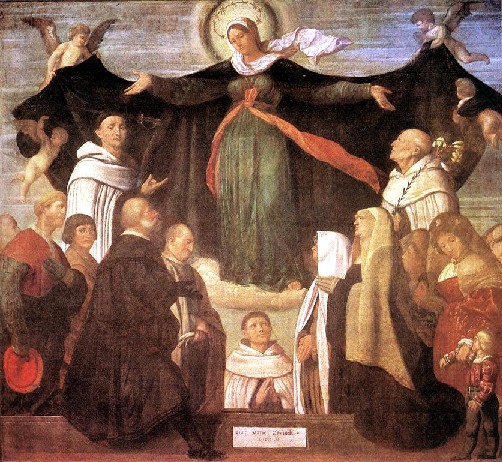
Our Lady of Mount Carmel


OUR LADY OF MOUNT CARMEL: St. Thomas of Villanova: Sermon 4 de Assumpt. Virginis: The contemplative life of the Blessed Virgin

File:Moretto, Madonna del Carmelo, accademia.jpg - Wikimedia Commons

What was Mary's life but one long act of contemplation, a continual outpouring of devotion, the incessant burning of a spiritual flame? We are not told of the blessed Virgin that she performed many miracles and signs, or made long journeys to spread the gospel, or gave extraordinary alms (which would have been impossible, because she lacked the means), or tended the sick, or redeemed captives, or built large numbers of churches or endowed religious houses with particular generosity. No; all the glory of the king's daughter was within, in the fervor of her heart, and in those golden borders, her pure thoughts and keen desires and the virtues which she possessed in all their manifold variety.

This does not mean that she did not perform Martha's noble tasks as well: she did, and brilliantly—far better than we can: for where we serve God in the persons of his servants, her service was given to him directly. Doing Martha's work did not stop the holy Virgin from fulfilling Mary's function. I lie asleep; but oh, my heart is wakeful, we read of her. Which is as if she were to say:  'As far as my outward behavior is concerned, I am asleep, because I am busy with my work; but inwardly I am awake, since all the time I am intent on prayer".

From the time when she soared up like an eagle and fixed her strong eyes on the dazzling brightness of the Godhead, she never looked back at the things of earth. Before she bore God's Word in her womb she gave herself to prayer and contemplation day and night, in company with the other virgins who lived with her in the Temple, where at the age of three she had been presented by her parents. She knew God before she knew herself, and before she could pray in words she habitually prayed in her heart. After the angel had brought her the message and she had become God's mother, she was always absorbed by the thought of the great mysteries accomplished in her. It was as though she were totally immersed in a vast sea of light and inwardly ravished in continual ecstasy, as the gospel shows us when it says that she treasured up all these sayings, and reflected on them in her heart. How could she forget God when she had carried him inside her body, nursed him on her lap and held him at her breast with her hands? Could a mother forget the son she bore in her womb? Could she possibly forget him if he was a Son like this one? After his ascension into heaven, we are told nothing more about Mary, except that she is said to have lived enclosed in an oratory, turning over in her mind all that she had seen and heard. That is all there was in the Virgin's life. That, in brief, is the whole story of her pilgrimage.

St. Bonaventure: Sermon IV: The Assumption: "He that made me rested in my tabernacle"


The Virgin Mary can say, He that made me rested in my tabernacle, because the Creator of all that is chose her virginal womb to rest in on his wedding night, there to become our Brother; and made of it a royal throne, there to sit as our King; and put on a priestly robe in it, so to make himself our Priest. Through the marriage-union the Virgin became God's mother, the royal throne made her Queen of Heaven, the priestly robe the advocate of the human race. It was appropriate that she should be all these things, since she belonged to the human race herself and her ancestors had been kings and priests. How that Virgin loved God, and how justifiably she can say: He that made me rested in my tabernacle.
That God would consummate his marriage in her womb David foresaw in the Spirit with prophetic certitude when he said, He hath set his tabernacle in the sun. He added as a bridegroom because the Virgin's room was the bridal room in which God was united to human nature, the place where he kissed his bride as he made the contract that bound her to him in marriage.

In that womb also God set up his royal throne, there to sit as our King. As the prophet says: Mercy and faithfulness return; a throne set up in David's dwelling-place, for a judge that loves right and gives redress speedily.

And from that womb God took the priestly vestment which he would have to wear if he was to enter the holy of holies. Christ has taken his place as our high priest, to win us blessings that still lie in the future. He makes use of a greater, a more complete tabernacle, which human hands never fashioned; it does not belong to this order of creation at all. It is his own blood, nor the blood of goats and calves, that has enabled him to enter, once for all, the sanctuary. On his way to the holy of holies, Christ our high priest passed through the Virgin's womb, where he put on the priest's robe, and from there proceeded to the cross, where he offered the holiest Of all victims and so obtained for us God's friendship. The reason why the Lord was bent on robing in the tabernacle of the Virgin's womb was this: he wanted to make her our advocate as well as himself. There could be no resisting mother and Son together; the two of them would bring firm confidence to us poor wanderers, bidding us cling to the hope we have in view. I will set my tabernacle in the midst of you, he said, and my soul shall no more cast you off for the blessed Virgin, our advocate, can never ask in vain.

We can approach the Virgin, then, with every confidence; whatever our need, we can go to her in all security. We shall do well to honor this tabernacle and flee to it for refuge, since the Lord himself took his ease there and the blessed Virgin could say with literal truth: He that made me rested in my tabernacle.