Monday, February 5, 2024

THE HYMN AND ITS FUNCTION IN THE OFFICE


Coste, Maurice: L'hymne et sa fonction dans l'office, - La Maison Dieu 1980, 143, 61-78


THE HYMN AND ITS FUNCTION IN THE OFFICE


“Christ Jesus, high priest of the new and eternal covenant, taking human nature, introduced into this earthly exile that hymn which is sung throughout all ages in the halls of heaven. He joins the entire community of mankind to Himself, associating it with His own singing of this canticle of divine praise”.


Thus, begins chapter IV, devoted to the divine office, of the conciliar Constitution of Vatican II on the Liturgy. If this Council takes the "part for the whole" and calls "hymn" the divine office which is sung in heaven, it is doubtless true that this piece holds a place and fulfills an important function at the heart of the official prayer of the 'Church.


The dynamic of the hymn in the office:


In the traditional monastic office, used  until Vatican II, the hymn occupies, according to the various hours, different places.


In an article entitled "The hymn in a renewed liturgy," published in 1967, Father Gelineau summed up the question of the place of the hymn:


 "In the divine office, unlike the Mass, the hymn is one of the constituent elements alongside reading, chanting and prayer. It fills, as the case may be, three functions:

    A) Opening: this is the case with little hours and Matins. The hymn "situates" the office in time and ‘launches’ the celebration.

    B) Deepening and lyrical expression as in the two great hours of the morning and evening, when the hymn is after reading ... In this place, the hymn deploys more effectively its own power than at the beginning of the Office.

    C) Conclusion: as in the case  with the Te Deum after the Vigils. "


The liturgical reform will ultimately chose the opening function of the hymn. This change of place will be formalized by the "General Instruction on the Liturgy of the Hours,”  published by the Sacred Congregation for Divine Worship on March 15, 1971, which mentions this twice:


    "The Liturgy of the Hours ... is constructed in such a way that , after the opening hymn, there is always psalmody, then a more or less long reading drawn from the Holy Scriptures, and finally prayers. »N ° 33

    "Immediately after the introductory verses, the appropriate hymn is sung or said. »N ° 42


The hymn takes on another color, and therefore plays another role, when it actually opens the service or when it comes in response to a chant and a long listening to the Word. In either case the hymn is a text that delivers a message regardless of where it is used.


The hymn and time


In these remarks about the place of the hymn in the office, we have passed over in silence a very important fact, namely the link between the hymn and the "mystery" celebrated by the office. The General Instruction of the Divine Office is quite explicit on this subject:


  "The role of the hymn is to give each hour or festival its own tone, and to make it easier and more joyful to enter prayer, especially when the celebration is with the people. »N ° 42

    "The hymns, which have their place in the office by virtue of a very ancient tradition, still retain their place. In truth, not only by their lyrical nature, they are expressly destined for the praise of God, but they are a popular element, and they even  manifest almost exclusively, better than the other parts of the office, the Hours or each holy day. »No. 173


The relationship between hymn and time is to be taken at two levels. First, there is the level of "cosmological" time with its oppositions of night and day; Morning / mid-day / evening. Christian hymnography has always celebrated the appearance of light, the dawn, connecting it, moreover, to the person of Christ and to his Resurrection at the dawn of Easter.  Similarly, the sunset and the shadows of the night were, and still are a true source of inspiration for the Compline hymns.


None of these hymns, however, celebrate morning or evening for themselves, and "cosmological" time is only a beginning. Indeed, there is a second level, where time takes on a "soteriological" dimension. This is the time of the history of salvation, from the creation of the world to the Parousia, the Incarnation, the earthly life of Jesus, the birth of the Church, etc.


St. Agatha


The Liturgica Horarum relies on the Common of a Virgin Martyr for the hymns of this memorial. However, this hymn is attributed to St. Damasus, Pope, and was found in the Ambrosian Liturgy.


Martyris ecce dies Agathae

Virginis emicat eximiae,

Christus eam sibi qua sociat,

Et diadema duplex decorat.


Stirpe decens, elegans specie,

Sed magis actibus atque fide,

Terrea prospera nil reputans,

Jussa Dei sibi corde ligans;


Fortior haec trucibusque viris,

Exposuit sua membra flagris.

Pectore quam fuerit valido,

Torta mamilla docet patulo.


Deliciae cui carcer erat;

Pastor ovem Petrus hanc recreat.

Laetior inde, magisque flagrans,

Cuncta flagella cucurrit ovans.


Ethnica turba, rogem fugiens,

Hujus et ipsa meretur opem;

Quos fidei titulus decorat,

His Venerem magis ipsa premat.


Jam renitens, quasi sponsa, polo,

Pro misero rogita Damaso.

Sic sua festa coli faciat,

Se celebrantibus ut faveat.


Gloria cum Patre sit Genito,

Spirituique proinde sacro,

Qui Deus unus et omnipotens

Hanc nostri faciat memorem. Amen.


Lo! is come the bright festal day of the glorious Martyr and Virgin Agatha, when Christ took her to himself, and a double crown wreathed her brow.


Though noble by birth and blessed with beauty, her grandest riches were her deeds and her faith. Earthly prosperity was nothing in her eyes, but her whole heart was on the precepts of her God.


Her bravery tired out the men that tortured her; she flinched not as they lashed her limbs; and her wounded breast reveals a dauntless heart.


Her prison was her paradise, where the Pastor Peter heals his bleeding lamb; and thence once more she runs to suffer, gladder and braver at every wound.


A Pagan city, once in flames, was saved by Agatha’s prayer.

The same can check, in Christina hears, the threatening fire of lust.

Now that though are in Heaven, clad as a bride of Christ, intercede with him for us miserable sinners, that He may us so to spend thy Feast, that our celebration may draw down His Grace.


Glory be to the Son, together with the Father and the Holy Ghost. May the One Almighty God grant that this his Saint be mindful of us. Amen


Translation From Gueranger, Liturgical Year, Vol. 4 pg. 248


Sunday, February 4, 2024

St. Gertrude the Great: The Herald of Divine Love: Book I: (Classics of Western Spirituality)


St. Gertrude the Great: The Herald of Divine Love: Book I: (Classics of Western Spirituality)

Chapter 12. Bearing with Human Defects


The person addressed in this chapter is the Lord.


In the same way I thank you for yet another similitude, no less useful and acceptable. You made me understand with what loving patience you bear with our faults so that in amending them we may be blessed.


One evening I had given way to anger, and the next day, before dawn, I was taking the first opportunity to pray when you showed yourself to me in the form and guise of a pilgrim; as far as I could judge, you seemed to be destitute and helpless. Filled with remorse, with a guilty conscience, I bewailed my lapse of the previous day. I began to consider how unseemly it was to disturb you, Author of perfect purity and peace, with the turmoil of our wicked passions, and I thought it would be better—rather, I considered that I would actually prefer—to have you absent rather than present (but at such a time only) when I neglected to repel the enemy who was inciting me to do things so contrary to your nature.

This was your reply: "What consolation would there be for a sick person who, leaning on others, has just succeeded in going out to enjoy the sunshine when he is suddenly overtaken by a storm, had he not the hope of seeing clear sky again? In the same way, overcome by my love for you I have chosen to remain with you during the storm brought on by your sins and to await the clear skv of your amendment in the shelter of your humiliation. "


Since my tongue is ineffective to express how, in this showing, you granted me still more abundantly the abiding gift of your grace, may the affection of my heart do so, and from the depths of my humility—to which I was brought by your loving condescension— may I learn to direct my gratitude effectively through the affective movement of my heart toward your love.

Saturday, February 3, 2024

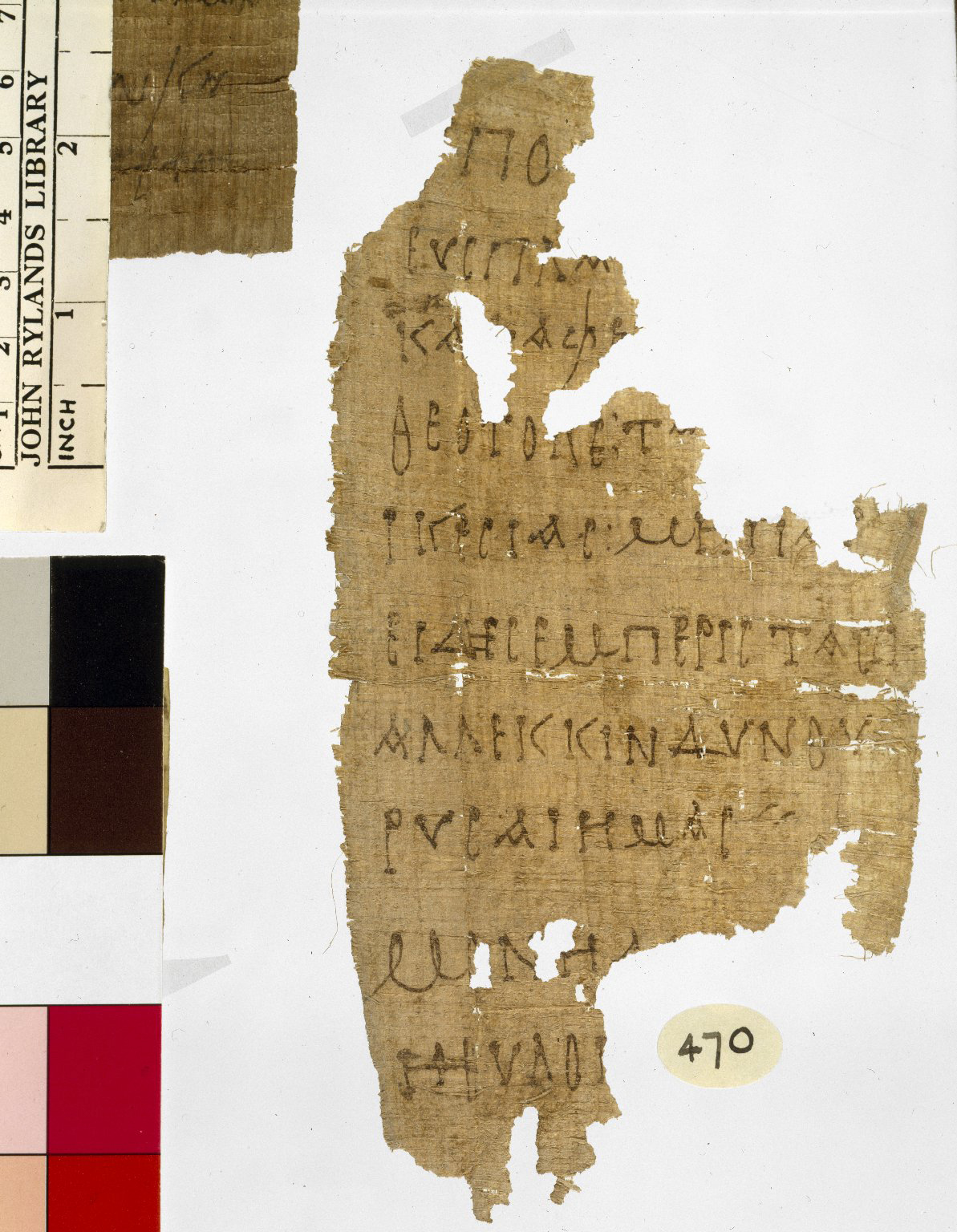
The earliest known Marian prayer

 The earliest known Marian prayer, like the Gospels themselves, is written in Greek. That is why, in it, the Virgin Mary is called Θεοτοκος, “theotokos,” the “Birth-Giver of God;” in sum, “the Mother of God.” That in such early prayer the Virgin Mary is already referred to with this title is remarkable, both from a historical and a theological standpoint.

SUB TUUM PRAESIDIUM
Courtesy of the John Rylands Library

A private copy of a prayer addressed to the Virgin Mary. Written in brown ink. Verso blank. Lines 4-9: "Mother of God (hear) my supplications: suffer us not (to be) in adversity, but deliver us from danger. Thou alone...

This prayer, as explained on Trisagion Film’s Website, was “found on a fragment of papyrus that dates all the way back to approximately AD 250,” only a couple of centuries after the death and resurrection of Christ, approximately a century before Constantine and the Edict of Milan but, more importantly, two centuries before the Third Ecumenical Council, the Council of Ephesus, in which the Virgin Mary was for the first time officially proclaimed “Mother of God,” Theotokos.


Thursday, February 1, 2024

The Presentation of the Virgin Mary at Lauds: At Lauds: 12th – 13th Centuries


 The Presentation of the Virgin Mary at Lauds: At Lauds: 12th – 13th Centuries  


María, virgo régia,

sponsa regis et fília,

te Dei sapiéntia

elégit ante sæcula.


Puélla carens mácula,

Dei domus ebúrnea,

te dedicávit cælitus

missus ab eo Spíritus.


Caritátis signáculum,

totíus boni spéculum,

auróra veri lúminis,

arca divíni séminis,


In domo summi príncipis

tu áffluis delíciis;

virga Iesse florígera,

repléris Dei grátia.


O margaríta cándida

et stella mundi spléndida,

fac puris esse móribus

nos vera templa Spíritus.


Sit Trinitáti glória,

o Virgo nobilíssima,

quæ te suórum múnerum

thesáurum dat magníficum. Amen.


Mary, royal Virgin, spouse and daughter of the King, the wisdom of God chose you before the ages. A young girl without spot. the ivory house of God, the Holy Spirit sent from above set you apart. Sign of love, Mirror of every good, dawn of the true Light, Ark of the divine seed. In the house of the highest Ruler you overflow with delights, the flourishing rod of Jesse, you are filled with the grace of God. O shining Pear, radiant Star of the world, grant that by living purely we may become temples of the Spirit. To the Trinity glory, O Virgin most noble, who gave you such a great treasury of gifts. Amen

O Supreme Physician J.M.J. Prayers by Saint Catherine of Siena


O Supreme Physician J.M.J. Prayers by Saint Catherine of Siena 

O Supreme Physician! O unspeakable Love of my soul! I have recourse to Thee. O infinite and eternal Trinity, I, though unworthy, ardently sigh for Thee! I turn to Thee in the mystical body of Thy holy Church, so that Thou mayest wash away with Thy grace all stains of my soul. I beseech Thee through the merits of St. Peter, to whom Thou hast committed the care of Thy Bark, to delay no longer to help Thy Spouse, who hopes in the fire of Thy charity and in the abyss of Thy admirable wisdom. Despise not the desires of Thy servants, but do Thou Thyself guide Thy holy Bark. O Thou, the Author of peace, draw unto Thyself all the faithful; dispel the darkness of the storm, so that the dawn of Thy light may shine upon the Head of Thy Church, and pour down upon him zeal for the salvation of souls. O eternal and merciful Father, Thou hast given us the means of restraining the arms of Thy justice in the humble prayer and ardent desires of Thy devoted servants, whom Thou hast promised to hear when they ask Thee to have mercy upon the world. 

 O powerful and eternal God, I thank Thee for the peace which Thou wilt grant to Thy Spouse! I will enter into Thy gardens, and there I will remain until I see the fulfilment of Thy promises, which never fail. Wash away our sins, O Lord, and purify our souls in the blood which Thy only-begotten Son shed for us, so that with joyful countenances and pure hearts we may return love for love, and, dying to ourselves, live for Him alone. Amen. Constant Prayer Holy Spirit Precious Blood, ocean of divine mercy: Flow upon us! Precious Blood, most pure offering: Procure us every grace! Precious Blood, hope and refuge of sinners: Atone for us! Precious Blood, delight of holy souls: Draw us! Amen.   

A Prayer for Fleeing of Self-Love O omnipotent Father, God of truth, God of love, permit me to enter into the cell of self-knowledge. I admit that of myself I am nothing, but that all being and goodness in me comes solely from You. Show me my faults, that I may detest my malice, and thus I shall f lee from self-love and find myself clothed again in the nuptial robe of divine charity, which I must have in order to be admitted to the nuptials of life eternal. Holy Spirit, come into my heart; draw it to Thee by Thy power, O my God, and grant me charity with filial fear. Preserve me, O beautiful love, from every evil thought; warm me, inflame me with Thy dear love, and every pain will seem light to me. My Father, my sweet Lord, help me in all my actions. Jesus, love, Jesus, love. Amen. 

Love Undefiled Eternal God, eternal Trinity, You have made the Blood of Christ so precious through His sharing in Your Divine nature. You are a mystery as deep as the sea; the more I search, the more I find, and the more I find the more I search for You. But I can never be satisfied; what I receive will ever leave me desiring more. When You fill my soul I have an ever-greater hunger, and I grow more famished for Your light. I desire above all to see You, the true light, as you really are. Amen. 

 “My Nature is Fire” In your nature, eternal Godhead, I shall come to know my nature. And what is my nature, boundless love? It is fire, because you are nothing but a fire of love. And you have given humankind a share in this nature, for by the f ire of love you created us. And so with all other people and every created thing; you made them out of love. O ungrateful people! What nature has your God given you? His very own nature! Are you not ashamed to cut yourself off from such a noble thing through the guilt of deadly sin? 

O eternal Trinity, my sweet love! You, light, give us light. You, wisdom, give us wisdom. You, supreme strength, strengthen us. Today, eternal God, let our cloud be dissipated so that we may perfectly know and follow your Truth in truth, with a free and simple heart. God, come to our assistance! Lord, make haste to help us!

From Prime


Dirígere et sanctificáre, régere et gubernáre dignáre, Dómine Deus, Rex cæli et terræ, hódie corda et córpora nostra, sensus, sermónes et actus nostros in lege tua et in opéribus mandatórum tuórum, ut hic et in ætérnum, te auxiliánte, salvi et líberi esse mereámur.

Per Dóminum nostrum Iesum Christum, Fílium tuum,
qui tecum vivit et regnat in unitáte Spíritus Sancti, Deus,
per ómnia sǽcula sæculórum.
Amen.

King of heaven and earth, Lord God,
  rule over our hearts and bodies this day.
Sanctify us,
  and guide our every thought, word and deed
  according to the commandments of your law,
so that now and for ever
  your grace may free and save us.
Through our Lord Jesus Christ, your Son,
who lives and reigns with you in the unity of the Holy Spirit,
God, for ever and ever.
Amen.