Thursday, February 22, 2024

From a homily by Saint Asterius of Amasea, bishop


 From a homily by Saint Asterius of Amasea, bishop

Be shepherds like the Lord

You were made in the image of God. If then you wish to resemble him, follow his example. Since the very name you bear as Christians is a profession of love for men, imitate the love of Christ.

Reflect for a moment on the wealth of his kindness. Before he came as a man to be among men, he sent John the Baptist to preach repentance and lead men to practice it.
John himself was preceded by the prophets, who were to teach the people to repent, to return to God and to amend their lives. Then Christ came himself, and with his own lips cried out: Come to me, all you who labor and are overburdened, and I will give you rest. How did he receive those who listened to his call? He readily forgave them their sins; he freed them instantly from all that troubled them. The Word made them holy; the Spirit set his seal on them. The old Adam was buried in the waters of baptism; the new man was reborn to the vigor of grace.

What was the result? Those who had been God’s enemies became his friends, those estranged from him became his sons, those who did not know him came to worship and love him.

Let us then be shepherds like the Lord. We must meditate on the Gospel, and as we see in this mirror the example of zeal and loving kindness, we should become thoroughly schooled in these virtues.

For there, obscurely, in the form of a parable, we see a shepherd who had a hundred sheep. When one of them was separated from the flock and lost its way, that shepherd did not remain with the sheep who kept together at pasture. No, he went off to look for the stray. He crossed many valleys and thickets, he climbed great and towering mountains, he spent much time and labor in wandering through solitary places until at last he found his sheep.

When he found it, he did not chastise it; he did not use rough blows to drive it back, but gently placed it on his own shoulders and carried it back to the flock. He took greater joy in this one sheep, lost and found, than in all the others.

Let us look more closely at the hidden meaning of this parable. The sheep is more than a sheep, the shepherd more than a shepherd. They are examples enshrining holy truths. They teach us that we should not look on men as lost or beyond hope; we should not abandon them when they are in danger or be slow to come to their help. When they turn away from the right path and wander, we must lead them back, and rejoice at their return, welcoming them back into the company of those who lead good and holy lives.

St. Ambrose: HEXAMERON 5.88: Commentary on Aeterne rerum conditor


St. Ambrose: HEXAMERON 5.88: Commentary on Aeterne rerum conditor


A, S. Walpole, Early Latin Hymns, says that this section of the Hexameron is a commentary on St. Ambrose’s hymn, Aeterne Rerum Conditor: ‘the passage appears to be based on the hymn, rather than the hymn on the passage’.


The cock's crow is pleasant at nightfall. It is not only pleasant, but useful, too. As a good domesticated fowl he arouses the sleeper, gives him warning when he is perturbed, and consoles the voyager by asserting in musical tones that night is approaching. When the cock crows, the thief forsakes his schemes and the star of dawn rises to illumine the sky. When the cock crows, the sailor's gloom and trepidation disappear. Tempests and storms stirred up by gusts of wind at evening tide subside. At his crowing the devout of heart bestir themselves for prayer and resume their reading. Finally, on this occasion 'the rock of the Church' washed away his sin which he had committed before the cock crowed. At cock-crow hope returns to all, the sick find comfort, the wounded find relief, the feverish are calmed, the lapsed return to the faith. Jesus has regard for those who stumble and corrects the errant. Hence, He paid heed to Peter and forthwith the sin departed. Peter revoked his denial, and his confession was completed. That this was God's plan and not a mere accident is revealed in the words of the Lord. It is written that Jesus said to Simon: 'Before the cock crows, thou wilt deny me three times.'


My translation of the hymn for comparison:


Eternal Creator of things, you who rule night and day, and give the time of the seasons that you may relieve our boredom. The cock, the watchman through the deep of night, now sounds, a nocturnal light for travelers, separating one from another. By this the morning star is aroused, the sky is parted from the darkness; by this every band of errors  abandons its harmful ways. By this the sailor regains his strength and the raging sea is calmed; by this Peter himself, the rock of the Church, by song washes away his guilt. O Jesus, look upon those who are falling, for by one glance you correct; if you see us, our lapses fall and crime is absolved by tears. You, O Light, shine on our senses, may sleep of our souls depart; our voices sing to you and our promises to you are kept.

Wednesday, February 21, 2024

Hymn for Compline in Lent: Prudentius


Hymn for Compline in Lent: Prudentius


From Milfull, The Hymns of the Anglo-Saxon Church


In one manuscript this hymn appears in the section for Lent, while in another it is among the ferial hymns. It is taken from Prudentius’s  Cathemerinon VI, verses 125-153.


Although not written as a Lenten hymn, nor as Compline hymn either, this hymn does cover many of the themes of the Lenten season: baptism, te fontis et lavacri, the passion, Crux pellit omne crimen, the temptation, O tortuose serpens.


Cultor Dei memento

te fontis et lavacri

rorem subisse sanctum,

te chrismate innotatum.


Fac, cum vocante somno

castum petis cubile,

frontem locumque cordis

crucis figura signet.


Crux pellit omne crimen,

fugiunt crucem tenebrae:

tali dicata signo

mens fluctuare nescit.


Procul, o procul vagantum

portenta somniorum,

procul esto pervicaci

praestigiator astu!


O tortuose serpens,

qui mille per maeandros

fraudesque flexuosas

agitas quieta corda,


Discede, Christus hic est,

hic Christus est, liquesce:

signum quod ipse nosti

damnat tuam catervam.


Corpus licet fatiscens

iaceat recline paullum,

Christum tamen sub ipso

meditabimur sopore.


Gloria eterno patei

et Christo vero regi,

paraclitoque sancto,

et nunc et in perpetuum.

Amen.

O you who worship God, remember that you were washed in the fount, submitted to the holy dew, were marked by the chrism. When sleep calls you, be sure to seek your chaste bed, your forehead and the place of your heart be signed with the figure of the cross. The cross repels all sin, darkness flees the cross, when such a sign is made, the mind will know no wavering. Far away, far way be the omens of wandering dreams, be far away, you deceiver, with your stubborn tricks. O writhing serpent, who through your thousand-fold wanderings and slippery deceits, agitate quiet hearts.  Depart! Christ is here! Christ is here! Melt away! The sign you yourself recognize damns your band. The body, grown weary, may lie back and relax a bit, yet even in sleep it meditates on Christ.  Glory to the eternal Father and to Christ the true King, and to the Holy Comforter, now and forever. Amen.

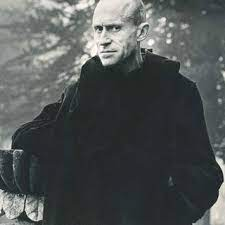
Dom Hubert van Zeller: quotes


Dom Hubert van Zeller: quotes

"Now, hope starts off by knowing that life is going to be difficult. It admits that, without grace, perfection is miles out of reach. It faces the idea of failure. It sees how there are bound to be disappointments and temptations all along the line. But it just goes right on trusting. A person who is strong in this kind of hope looks upon everything that comes along—even mistakes and serious failures—as being a chance not to be missed."[7]

From The Mystery of Suffering: "The Christian ideal is shown to us in the garden of Gethsemane: our Lord asking that the suffering might pass from him, while at the same time being ready to bear it if this is the Father's will."[8]

From The Mystery of Suffering: "The saints flinch as instinctively as others when the cross comes along, but they do not allow their flinching to upset their perspectives."

"All I can say is that had I been healthy all my life I would not have prayed [so well] or put myself in God's hands; and had I been better looking I would not have escaped situations which the more handsome of my friends got themselves involved in."[4]

When discussing people's fear of death with Ronald Knox: "One clings, and I can't think why. You would have thought anyone would prefer heaven to fruit juice."

Aquinas on Fasting


Aquinas on Fasting


The times fixed for fasting by the Church are well chosen. Fasting has two objects in view :


(i) The destruction of sin, and


(ii) the lifting of the mind to higher things.


The times self-indicated for fasting are then those in which men are especially bound to free themselves from sin and to raise their minds to God in devotion. Such a time especially is that which precedes that solemnity of Easter in which baptism is administered and sin thereby destroyed, and when the burial of Our Lord is recalled, for we are buried together with Christ by baptism into death (Rom. vi. 4). Then, too, at Easter most of all, men s minds should be lifted, through devotion to the glory of that eternity which Christ in his resurrection inaugurated.


Wherefore the Church has decreed that immediately before the solemnity of Easter we must fast, and, for a similar reason, that we must fast on the eves of the principal feasts, setting apart those days as opportune to prepare ourselves for the devout celebration of the feasts themselves.

Tuesday, February 20, 2024


The hymn Aures ad nostras in a breviary according to the Use of Esztergom, the primatial see of Hungary, 1523-24. (Bibliothèque nationale de France, Département des Manuscrits, Latin 8879)
St Pius V’s reform of the Roman breviary made very few alterations to the established repertoire of musical propers for the Office in all their genres (antiphons, responsories etc.) This hymn was therefore left in its place, with a small correction of the awkwardly arranged opening words (“Ad preces nostras Deitatis aures”), but otherwise unchanged.
In early 1588, Pope Sixtus V established the Sacred Congregation for Rites, and appointed as its first prefect Alfonso Gesualdo, archbishop of Conza in southern Campania, and uncle of the famous composer Carlo Gesualdo. As part of the preparatory work for new editions of the breviary and missal of St Pius, the cardinal wrote to various nuncios in Europe, asking them to canvas the learned men of their respective nations for suggestions as to what might be due for revision. The reports of two different nuncios (Prague and Madrid) contained the suggestion that Aures ad nostras be removed from the Office completely; another (Venice) suggested it be corrected, since its numerous metrical flaws made the Catholic Church look foolish to the Protestant heretics. [1]
This information comes from an article by a chant scholar and canon of the cathedral of Chartres, Fr Yves Delaporte, published in 1907. In the second part, he gives the following information from the notes of the commission that prepared the revised breviary which Pope Clement VIII promulgated in 1602. “The hymn Ad preces nostras... has been removed; it seemed inept in both its choice of words and phrasing, was put together with no account of (metrical) feet or syllables, and further, was superfluous, since in all offices, the same hymn is said at both Vespers, and no other solemn observance... has more then three hymns.” [2]
In the post-Conciliar Rite, however, it has been restored to use, but not in Lent. The first three stanzas serve as the hymn for the Office of Readings on Tuesday of weeks 2 and 4 of the Psalter, and the fifth, sixth and eighth on Wednesday; on both days, it concludes with the same, original doxology. In accordance with the usual censorship of any negative thoughts that might disturb the complacency of Modern Man™ in his splendor, the fourth stanza, which says that “we are submerged beneath the wave of sin” is suppressed, as is the seventh, which refers to the newly unfashionable practice of fasting, and the “thousand vices of the flesh.” Both of these stanzas also contain significant blemishes in their Latinity. Surprisingly, the reference to Satan in the eighth stanza remains in place, and only a few other alterations were made.
This first recording, from the always wonderful Schola Hungarica, begins with the antiphon Media vita, which was commonly sung with the Nunc dimittis at Compline in Lent. The first stanza of the hymn begins at 2:20, in a Gregorian melody, followed by a polyphonic version of the second, and only these two are sung.
The first stanza of the hymn in a musical collection of the 15th century. (Bibliothèque nationale de France, département Musique, RES-1750)
This English translation is from the collection Pange Lingua by Alan G. McDougall (Burns and Oates, London, 1916.) [3]
Ad preces nostras Deitátis aures, [4]
Deus, inclína pietáte sola:
Súpplicum vota súscipe, precámur
   Fámuli tui.
God, of thy pity,
   unto us thy children
Bend down thine ear in
   thine own loving kindness,
And all thy people’s
   prayers and vows ascending
Hear, we beseech thee.
Réspice clemens solio de sancto,
Vultu seréno lámpades illustra:
Lúmine tuo ténebras depelle
   Péctore nostro.
Look down in mercy
   from thy seat of glory.
Pour on our souls the
   radiance of thy presence,
Drive from our weary
   hearts the shades of darkness,
Lightening our footsteps.
Crímina laxa pietáte multa,
Ablue sordes, víncula disrumpe:
Parce peccátis, réleva jacentes
   Déxtera tua.
Free us from sin by
   might of thy great loving,
Cleanse thou the sordid,
   loose the fettered spirit,
Spare every sinner,
   raise with thine own right hand
All who have fallen.
Te sine tetro mérgimur profundo:
Lábimur alta scéleris sub unda:
Brachio tuo tráhimur ad clara
   Sídera caeli.
Reft of thy guiding
   we are lost in darkness,
Drowned in the great wide
   sea of sin we perish,
But we are led by
   thy strong hand to climb the
Ascents of Heaven
Christe, lux vera, bónitas et vita,
Gaudium mundi, píetas immensa,
Qui nos a morte róseo salvasti
   Sánguine tuo:
Christ, very light and
   goodness, life of all things,
Joy of the whole world,
   infinite in kindness,
Who by the crimson
   flowing of thy life-blood
From death hast saved us,
Insere tuum, pétimus, amórem
Méntibus nostris, fídei refunde
Lumen aeternum, charitátis auge
   Dilectiónem.
Plant, sweetest Jesu,
   at our supplication
Deep in our hearts thy
   charity: upon us
Faith’s everlasting
   light be poured, and increase
Grant us of loving.
Tu nobis dona fontem lacrimárum,
Jejuniórum fortia ministra;
Vitia carnis millia retunde
   Frámea tua.
Grant to our souls a
   holy fount of weeping,
Grant to us strength to
   aid us in our fasting,
And all the thousand
   hosts of evil banish
Far from thy people.
Procul a nobis pérfidus absistat
Satan, a tuis víribus confractus:
Sanctus assistat Spíritus, a tua
   Sede demissus
Bruised by thine heel may
   Satan and his legions
Far from our minds be
   driven, that are guided
By the indwelling
   of the Holy Spirit
Sent from Heaven
Gloria Deo sit aeterno Patri:
Sit tibi semper, Genitóris Nate,
Cum quo aequális Spíritus
      per cuncta,
   Sáecula regnat. Amen.
Glory to God the
   Father everlasting,
Glory for ever
   to the Sole-begotten,
With whom the Holy
   Spirit through the ages
Reigneth coequal.

Saturday, February 17, 2024

THE FIRST SUNDAY OF LENT: Homily of St. Leo the Great: 1 Sermon 1 for Lent, 52 and 3-4


THE FIRST SUNDAY OF LENT: Homily of St. Leo the Great: 1 Sermon 1 for Lent, 52 and 3-4.


We have many interior battles; the flesh lusts against the spirit and the spirit against the flesh. If, in this conflict the lusts of the flesh prevail, the spirit will be shamefully dishonored and this will be a great misfortune, for in this case the ruler will become the slave. If, on the contrary, the spirit submits to its Master, rejoices in what he gives from on high, despises the of earthly pleasures, and prevents sin from reigning in his mortal body, reason will keep the scepter which is its just right and no illusion of evil spirits will be able to break down the ramparts: for man has no true peace and liberty except when the flesh is ruled by the spirit, its judge, and the spirit is governed by God, its master. It is good to prepare at all times by a constant watchfulness in order to check our wakeful enemies. But we must do so with still more care and zeal and organize more zealously, in this season of the year when our crafty enemies redouble their cunning maneuvers endlessly. They know well that these are the holy days of Lent, and that Lent is kept by punishing ourselves for all our meanness and in effacing all our past negligence, and they use all the power of their malice in order to make those who wish to celebrate Easter fall into some impurity, and to change what should be a source of pardon into an occasion of sin.


So, my dear brethren, let us enter upon Lent with a greater fidelity to the service of Christ. It is as if we were beginning a fight for sanctity. Then, let us prepare our souls for fight with temptations; and let us recognize that the more zealous we are for our salvation, the more violently shall we be attacked by our enemies. But he who dwells in us is stronger than he who is against us. Our strength comes from his power in whom we place our confidence. For if our Lord allowed himself to be tempted, it was in order that we might have, with the strength of his aid, the teaching of his example. You have just heard now he vanquished his enemy with the words of the law, not by the might of his power; the honor which would come to his humanity would be greater, and greater also the punishment of his adversary, if he triumphed over the enemy of the human race, not as God, but as man. He fought then, that we might fight following close upon him; he conquered, that we might conquer as he did. For the acts Of virtue, my dear brethren, are not produced without the experience of temptations, faith does not grow without trials, combat without an enemy, victory without a battle. Life is passed in the midst of snares and combats. If we would not be surprised, we must watch; if we wish to conquer, we must fight. This is why Solomon who was wise said: My Son, if thy mind is to enter the Lord's service, prepare thyself, to be put to the test. He was full of the wisdom of God, he knew that there could be no fervor without laborious conflict; and foreseeing the danger of these fights, he anticipated them in order that, warned against the attacks of the tempter, we should be ready to parry his blows.